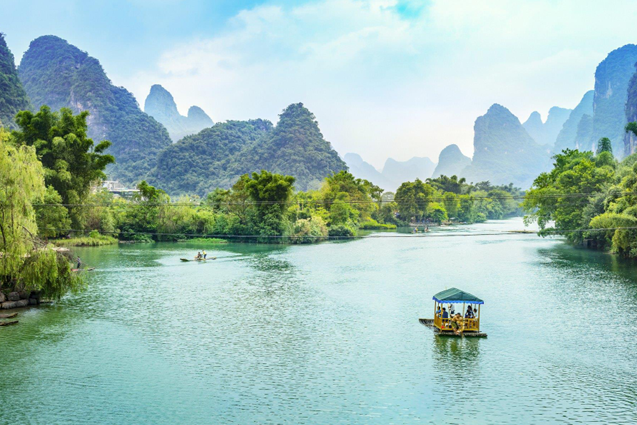
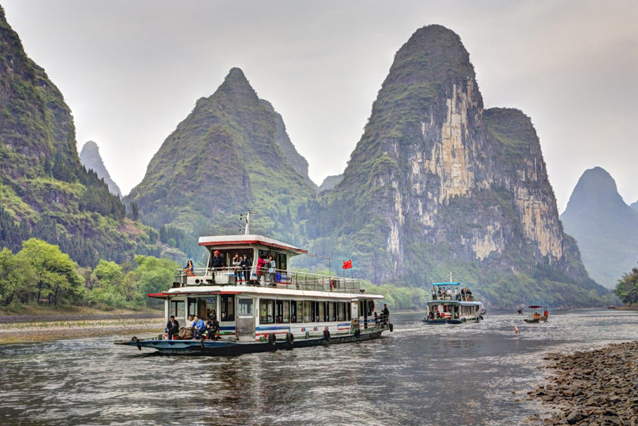
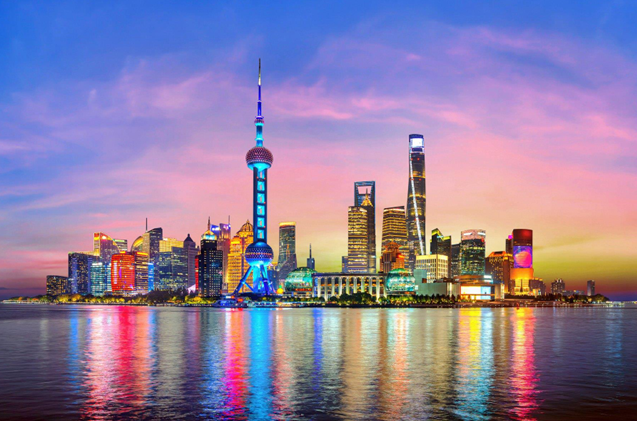
Eight days, from Guangzhou to Shanghai, with the mountains and waters of Guilin in between. The Longji rice terraces, at least 2,300 years old. A cruise down the Li River among karst peaks, past the landscape featured on the 20-yuan banknote. A bamboo raft and bicycles in the countryside around Yangshuo.

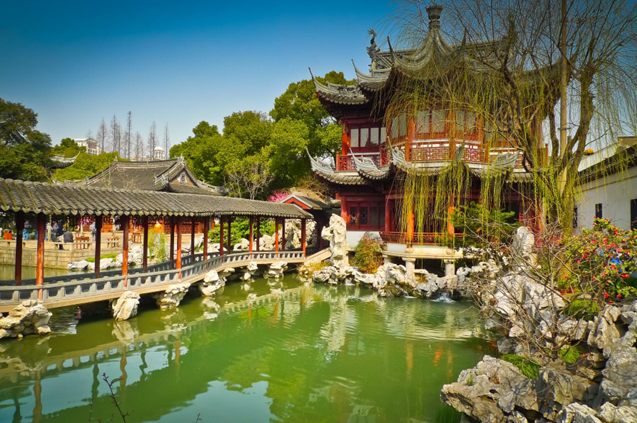
And the finale is Shanghai: Yu Garden, the Jade Buddha Temple, the Oriental Pearl Tower, the evening Bund waterfront and a cruise on the Huangpu River.

A Russian-speaking guide, private transport, a high-speed train, the Guilin → Shanghai flight, entrance tickets, cruises, a raft, bicycles and a show are already included in the price.

    • Tour Type: Group Tour
    • Duration: 8 days
    • Program: 4 excursions days 
    • Guide: Russian-speaking
    • Group size: up to 10 people
    • Meals: 7 breakfasts, 4 lunches, 4 dinners
    • Transportation: private, train and plane
    • Accommodation: twin rooms, 7 nights


    Upcoming Tour Dates

    may
    8
    May 8, 2027


    What’s Included:

    • Accommodation: 7 nights, Guangzhou (1), Guilin (2), Yangshuo (2), Shanghai (2)
    • Meals: 7 breakfasts, 4 lunches, 4 dinners
    • Russian-speaking guide on all excursion days
    • Private transport on excursions and individual transfers to airports and railway stations as per the program
    • High-speed train Guangzhou → Guilin and flight Guilin → Shanghai
    • Entrance tickets, cruises on the Li and the Huangpu, bamboo raft on the Yulong, bicycles, the Oriental Pearl Tower observation deck and the “Romance of Guilin” show
    • Medical and baggage insurance

    What’s Not Included:

    • Flights to Guangzhou and from Shanghai
    • Meals not specified in the program
    • Personal expenses and tips


    Why Choose This Tour?

    The Li River. About four hours on a boat down the river, among karst peaks, all the way to Yangshuo. The Guilin karst has been part of the UNESCO World Heritage Site “South China Karst” since 2014, and the landscape at the Huangbutan shoal on this route is featured on the 20-yuan banknote.

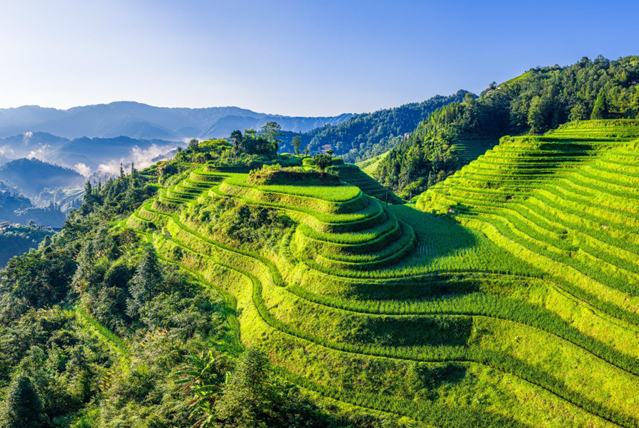
    The “Dragon’s Backbone” terraces. The Longji rice terraces are cultivated by the Zhuang and Yao peoples and, according to the FAO, are at least 2,300 years old. In 2018 the FAO added them to its list of Globally Important Agricultural Heritage Systems.

    Rural Yangshuo. A bamboo raft on the Yulong River, bicycles along the “Ten-Mile Gallery” among limestone mountains and fields, and the old village of Xingping on the bank of the Li River.

    Shanghai, from an old garden to skyscrapers. Yu Garden, founded in 1559, the Jade Buddha Temple, the 468-meter Oriental Pearl Tower, the evening Bund waterfront and a Huangpu cruise with views of the Pudong skyscrapers.

    The essentials are already included. A Russian-speaking guide on all excursion days, private transport, the Guangzhou → Guilin high-speed train and the Guilin → Shanghai flight, entrance tickets, cruises on the Li and the Huangpu, a raft, bicycles, a show, breakfasts, lunches and dinners as per the program, and medical insurance.


    A detailed daily tour

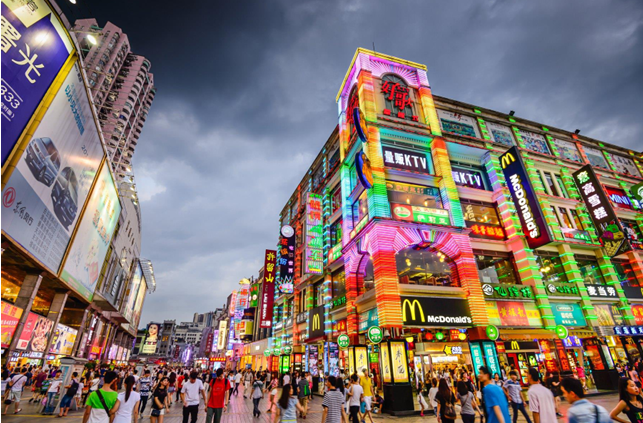
    Eight unforgettable days across China, from the neon streets of Guangzhou and the karst peaks of Guilin to the rice terraces of Longji, a Li River cruise, rural Yangshuo and the skyline of Shanghai. Detailed day-by-day itinerary, four guided excursion days, a high-speed train and a flight, all entrance tickets, cruises, a bamboo raft ride and a show included, and comfortable small-group travel.

    from 1750 € Per person

    Tour Program

    Guangzhou is the first stop on the route. The city was founded more than 2,200 years ago, in 214 BC, under the name Panyu. Its nickname is the “City of Rams”: according to legend, five immortals descended here riding five rams and brought rice to the people. From the mid-18th century until 1842, Guangzhou was the only Chinese port open to European merchants. Today more than 19 million people live here.

    At Baiyun Airport you will be met and taken to the hotel in a private car.

    The evening is free. You can stroll along Shangxiajiu, a pedestrian street more than a kilometer long with hundreds of shops; cars have been banned here since 1995. And for dinner, try authentic Cantonese dim sum, which is traditionally served with tea.

    Meals: not included.

    After breakfast, transfer to Guangzhou South Railway Station and a high-speed train to Guilin West Station, about 2.5 hours on the way. In Guilin you will be met and taken to the hotel, where you will spend two nights.

    Guilin means “forest of sweet osmanthus”. The most famous line about it, “The mountains and waters of Guilin are the finest under heaven”, was written in 1201 by the Song official Wang Zhenggong, and the inscription with these verses carved into the rock was only found in 1983.

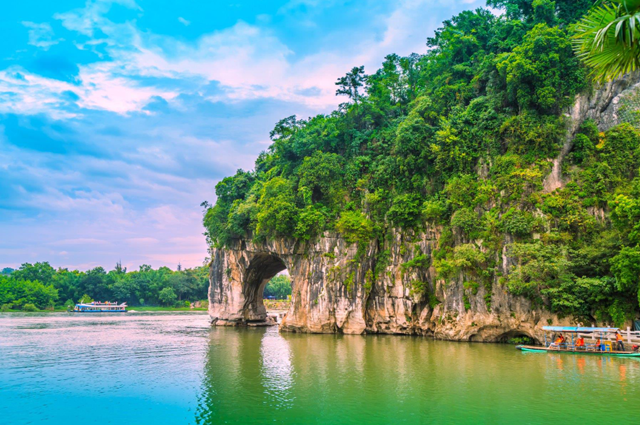
    The symbol of the city is Elephant Trunk Hill, which appears on Guilin’s emblem. You will visit it with your guide tomorrow.

    The evening is free for a walk through the Dongxixiang quarter, the “East and West Alleys”. Its streets have survived from the Ming and Qing dynasties, and this is where people try local Guilin snacks.

    Meals: breakfast.

    First, Elephant Trunk Hill at the confluence of the Li River and the Taohua River. The rock with an arch right at the water’s edge looks like an elephant that has lowered its trunk into the river to drink.

    Then, the Longji rice terraces in Longsheng County. “Longji” means “dragon’s backbone”: the tiers of fields on the slopes look like dragon scales, and the mountain ridge like a spine. The terraces are cultivated by the Zhuang and Yao peoples. According to the FAO, they are at least 2,300 years old, and in 2018 the FAO added them to its list of Globally Important Agricultural Heritage Systems.

    A walk along the paths between the terraces, with panoramas of mountains and valleys. In the evening we return to Guilin.

    Meals: breakfast, lunch, dinner.

    A classic cruise down the Li River, about four hours among karst peaks. The Guilin karst has been part of the UNESCO World Heritage Site “South China Karst” since 2014.

    On the way, the rock Nine Horses Fresco Hill, the “Mountain with a Painting of Nine Horses”: in the patterns on its stone wall, people make out nine horses. And at the Huangbutan shoal you will see the landscape that appears on the back of the 20-yuan banknote. The boat docks in Yangshuo, where you will spend two nights.

    In the afternoon, the “Paradise Corner”: a picturesque village among karst mountains, with caves, channels and the customs of the local peoples.

    In the evening, the large-scale theatrical show “Romance of Guilin”.

    Meals: breakfast, lunch, dinner.

    In the morning, the surroundings of the Yulong River, whose name means “meeting the dragon”. The river winds among karst mountains and fields, and you will drift leisurely down it on a bamboo raft.

    Another outing is by bicycle along the “Ten-Mile Gallery”, among limestone mountains and village fields.

    In the afternoon, Xingping, a quiet old village on the bank of the Li River. The landscape from the 20-yuan banknote, which you saw the day before from the boat, is right in its surroundings.

    Meals: breakfast, lunch, dinner.

    After breakfast, an individual transfer from the hotel in Yangshuo directly to Guilin Airport, about 1.5 hours on the way, and a flight to Shanghai. Hotel check-in.

    Shanghai stands on the Huangpu River, which divides the city into two parts: Puxi, “west of the Huangpu”, and Pudong, “east of the Huangpu”.

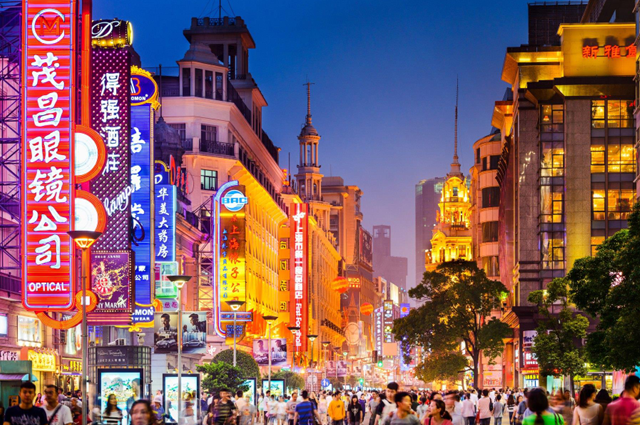
    The evening is free. You can have dinner on Nanjing Road. Its pedestrian section was opened in September 1999.

    Meals: breakfast.

    In the morning, the Jade Buddha Temple. It was founded in 1882, when the monk Huigen from Mount Putuo brought jade statues of the Buddha from Burma. The present temple was built over ten years, from 1918 to 1928.

    Then Yu Garden. Construction began in 1559 by the official Pan Yunduan, so that his father, the minister Pan En, could spend his old age in peace. Hence the name: “Yuyuan” is a garden that delights aging parents.

    In the second half of the day, the observation deck of the 468-meter Oriental Pearl Tower.

    In the evening, a walk along the Bund waterfront. Its buildings once housed foreign banks and trading houses, and because of the variety of styles the waterfront is called an “exhibition of the architecture of all nations”. On the opposite bank are the skyscrapers of Pudong, including the 632-meter Shanghai Tower, the tallest building in China. The day ends with a cruise on the Huangpu River.

    Meals: breakfast, lunch, dinner.

    Breakfast at the hotel and an individual transfer to Pudong or Hongqiao Airport for your departure.

    Shanghai is one of those cities you want to return to as soon as you leave. So this is not goodbye, but see you again.

    Meals: breakfast.

    Frequently Asked Questions

    Have questions about tours, bookings, or documents? We've gathered answers to the most common questions to make your trip as smooth and worry-free as possible.

    • 14. How flexible is the itinerary, and how much free time will we have?

      The tour is rich in experiences, but in some evenings you’ll have free time to rest or explore independently without disrupting the schedule.

    • 15. What are the baggage rules for domestic flights?

      Typically, one checked bag of 15–23 kg and one carry-on up to 8 kg are allowed. Limits vary by airline, but we’ll provide all details in advance.

    • 16. What is the role of the guide?

      You’ll be accompanied by a tour leader responsible for organization and logistics. In each city or national park, local professional guides will provide in-depth knowledge and unique insights.

    • 17. Are there opportunities for photography, and can I use drones?

      Yes, there will be countless photo opportunities, and guides will recommend the best spots. However, drones are prohibited in most national parks, including Iguazú and Los Glaciares.

    • 18. What climate should we expect, and what clothing should we bring?

      Your trip takes place in Argentine spring/fall, but climates vary greatly along the route. Dress in layers: warm clothes and windbreakers for Patagonia, light breathable clothing for the hot, humid Iguazú tropics, and warm, sun-protective gear for the high-altitude Puna.

    • 19. What’s the best way to exchange money?

      The local currency is the Argentine peso (ARS). We recommend bringing cash in USD or EUR to exchange at the favorable “blue” rate. In remote regions, especially in the north, cash may be the only payment option. We’ll help with exchanges upon arrival.

    • 20. What are the main safety rules?

      Argentina, like much of Latin America, has higher crime rates than Europe, mostly petty theft. By following simple precautions, you’ll stay safe:
      • Avoid wearing expensive jewelry or watches.
      • Always keep an eye on your bag, especially in crowds and on public transport.
      • Use hotel safes for valuables.
      • Avoid visiting unsafe neighborhoods (“villas”) or walking alone at night in poorly lit areas.

    • 21. In what language will the tour be conducted?

      Local guides speak English and Spanish. The tour leader speaks Russian, Spanish, and English, and will provide translation into Russian if needed.

    • 22. Do I need a visa for Argentina?

      Visa requirements depend on your nationality. For citizens of the USA, EU, and most CIS countries (including Russia), a tourist visa is not required for stays up to 90 days. Please always check the latest requirements for your country.

    • 23. What are the tipping rules in Argentina?

      Tipping is expected but not mandatory. In restaurants, 10% is customary. In cafés, small change is fine. Taxi drivers don’t expect tips, but rounding up is common.

    • 24. Do I need any vaccines?

      No vaccines are mandatory for entry. However, since the trip includes the tropical Iguazú region, the WHO recommends vaccination against yellow fever.

    • 25. Is travel insurance mandatory?

      It is not required for entry into Argentina, but we strongly recommend purchasing it for your safety and peace of mind.

    • 26. What about electricity and connectivity?

      Argentina uses 220V and Type I plugs (three flat prongs). Bring a universal adapter. Wi-Fi is available in most hotels, though coverage may be weak in remote areas (Puna, El Chaltén). A local SIM card is recommended for reliable mobile connection.

    • 27. What souvenirs can I bring back from Argentina?

      Argentina is famous for leather goods, wine, mate sets, and sweets such as dulce de leche. In the highlands, you’ll also find beautiful wool products.

    Order a free consultation