Seven days in two capitals — imperial Beijing and ancient Xi’an. The Forbidden City, Tiananmen Square and the Great Wall at Mutianyu. The Terracotta Army of China’s first emperor and the Tang-dynasty Big Wild Goose Pagoda.

A Russian-speaking guide, private transport, the high-speed train Beijing → Xi’an, entrance tickets, the cable car on the Great Wall and an audio guide in the Forbidden City are already included in the price.

    • Tour Type: Group Tour
    • Duration: 7 days
    • Program: 4 sightseeing days
    • Guide: Russian-speaking
    • Group size: up to 10 people
    • Meals: 6 breakfasts, 4 lunches, 4 dinners
    • Transportation: private, high-speed train to Xi’an
    • Accommodation: double rooms, 6 nights


    Upcoming Tour Dates

    mar
    27
    March 27, 2027


    What’s Included:

    • Accommodation: 6 nights — Beijing (3), Xi’an (3)
    • Meals: 6 breakfasts, 4 lunches, 4 dinners
    • Russian-speaking guide on all sightseeing days
    • Private transport on excursions and private transfers to and from airports and railway stations as per the programme
    • High-speed train Beijing → Xi’an
    • Entrance tickets as per the programme, including the Forbidden City with an audio guide, the Great Wall at Mutianyu with cable car and shuttle, the Terracotta Army and a hands-on class at the terracotta warrior workshop
    • Medical and baggage insurance

    What’s Not Included:

    • Flights to Beijing and from Xi’an
    • Meals not mentioned in the programme
    • Personal expenses and tips


    Why Choose This Tour?

    The Forbidden City. The palace where 24 emperors of the Ming and Qing dynasties lived from 1420 has been a UNESCO World Heritage Site since 1987. Together with Tiananmen Square and Jingshan Hill, it stands on the Beijing Central Axis, which UNESCO added to its list in 2024.

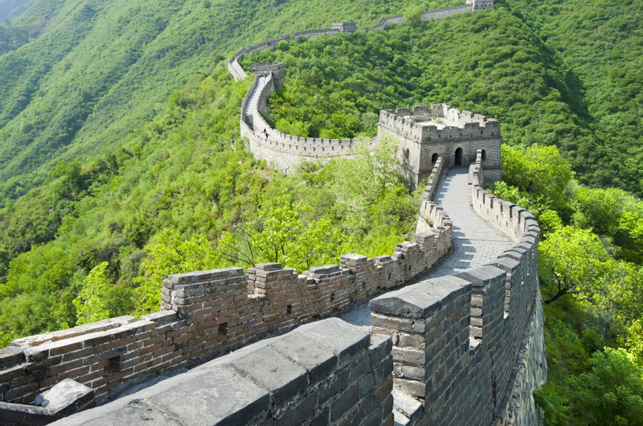
    The Great Wall at Mutianyu. The wall here was first built as early as the 6th century, and from 1568 the section was rebuilt under the direction of General Qi Jiguang. Mutianyu has 22 watchtowers, and tickets for the cable car and shuttle are already included.

    The Terracotta Army. Thousands of clay warriors and horses from the mausoleum of Qin Shi Huang, the first unifier of China, were found in 1974 by farmers digging a well. All the warriors are different, and the mausoleum has been a UNESCO World Heritage Site since 1987.

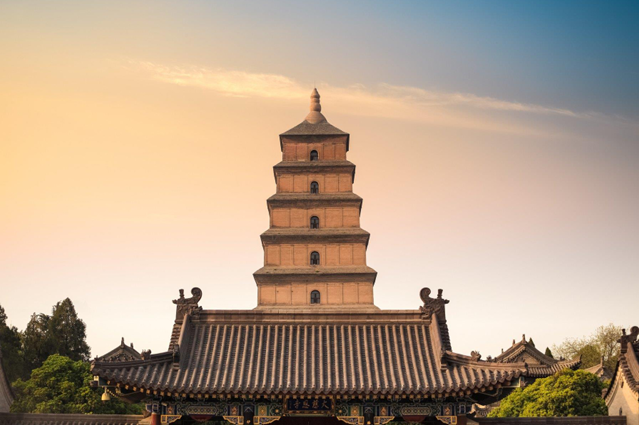
    The Big Wild Goose Pagoda. The pagoda was built in 652 to house the sutras that the monk Xuanzang brought back from India. It is the earliest and largest surviving pagoda of the Tang era and part of the UNESCO World Heritage Site “Silk Roads”.

    The essentials are already included. A Russian-speaking guide on all sightseeing days, private transport, the high-speed train Beijing → Xi’an, entrance tickets, the cable car and shuttle on the Great Wall, an audio guide in the Forbidden City, a hands-on class at the terracotta warrior workshop, breakfasts, lunches and dinners as per the programme, and medical insurance.


    A detailed daily tour

    Seven unforgettable days in two ancient capitals, from the Forbidden City, Tiananmen Square and the Great Wall at Mutianyu in Beijing to the Terracotta Army and the Big Wild Goose Pagoda in Xi’an. Detailed day-by-day itinerary, four guided sightseeing days, the high-speed train from Beijing to Xi’an, all entrance tickets and a hands-on class at the terracotta warrior workshop included, and comfortable small-group travel.

    from 1200 € Per person

    Tour Program

    Beijing is the first stop on the route. Its name means “Northern Capital”: the city was given this name in 1403, under the Ming dynasty. Today almost 22 million people live here.

    At Beijing airport you will be met and driven to your hotel in a private car.

    The evening is free. You can take a stroll along Wangfujing for street food and souvenirs: the street’s name combines the words “princely residences” and “well”, and it became a pedestrian street in 1999.

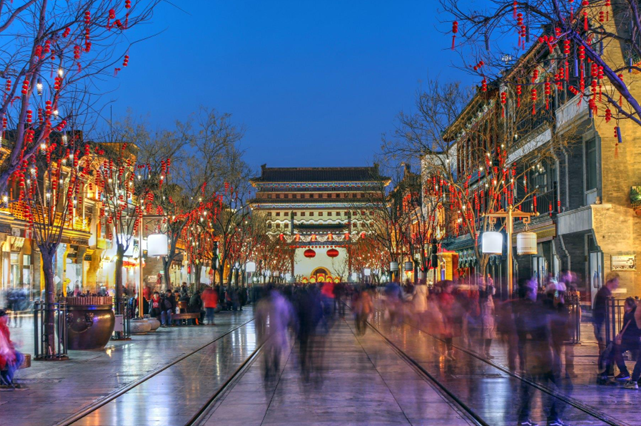
    Or wander along the old shopping streets of Qianmen and Dashilan, lit up in the evening. They lie by Qianmen Gate — the main southern gate of the Inner City, built under the Yongle Emperor — and people have been trading here for several centuries. Old shops survive on Dashilan, such as the Tongrentang pharmacy: it was founded in 1669, and from 1723 it supplied medicines to the imperial court.

    Meals: not included.

    In the morning, Tiananmen Square, one of the largest squares in the world. It takes its name from Tiananmen, the “Gate of Heavenly Peace”. On 1 October 1949, Mao Zedong proclaimed the founding of the People’s Republic of China on this square.

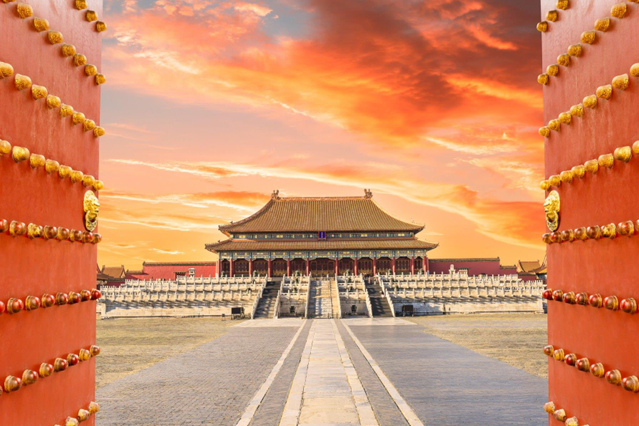
    Then the Forbidden City, an in-depth visit with an audio guide. The palace was built in 1406–1420 under the Yongle Emperor, and for more than five centuries it was home to 24 emperors — 14 of the Ming dynasty and 10 of the Qing dynasty. Since 1925 the palace has been the Palace Museum (Gugong), and since 1987 a UNESCO World Heritage Site.

    In the afternoon, Jingshan Hill, with a panoramic view of central Beijing and the roofs of the Forbidden City. It was here, in 1644, when rebels took Beijing, that Chongzhen, the last emperor of the Ming dynasty, took his own life.

    Tiananmen Square, the Forbidden City and Jingshan stand on the Beijing Central Axis, a 7.8 km line that was inscribed on the UNESCO World Heritage List in 2024.

    Meals: breakfast, lunch, dinner.

    Half a day on the Great Wall, at the Mutianyu section. The wall here was first built in the 6th century, under the Northern Qi dynasty. In 1404, under the Ming dynasty, a pass was established here, and from 1568 the section was rebuilt under the direction of General Qi Jiguang. Mutianyu has 22 watchtowers; tickets for the cable car and shuttle are included. The Great Wall has been a UNESCO World Heritage Site since 1987.

    In the afternoon, a photo stop outside the Olympic venues, the Bird’s Nest and the Water Cube. The Bird’s Nest was built for the 2008 Olympics and hosted the opening and closing ceremonies of both the 2008 Summer Games and the 2022 Winter Games. And at the Winter Olympics the Water Cube became the “Ice Cube”, where the curling competitions were held.

    In the evening, a stroll along Nanluoguxiang, a hutong about 800 metres long, laid out as early as the Yuan dynasty: old courtyards, cafés and small shops.

    Meals: breakfast, lunch (or lunch box), dinner.

    In the morning, a transfer to the station and a high speed train to Xi’an; the journey takes about 4.5 to 5.5 hours. In Xi’an you will be met at the station and taken to your hotel.

    In ancient times Xi’an was called Chang’an, and under the Han and Tang dynasties it was the capital of China.

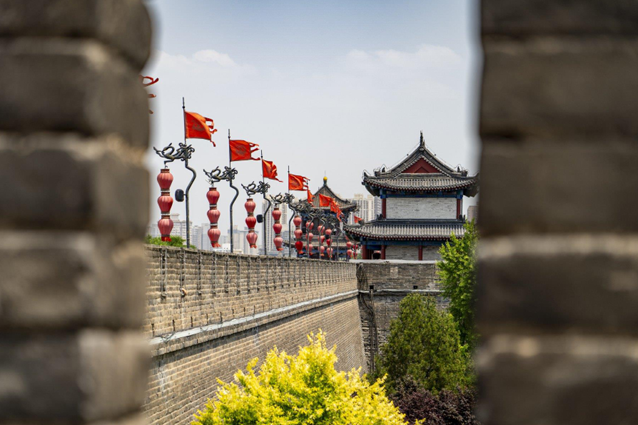
    The evening is free. You can walk along the city wall, lit up in the evening. It was completed in 1378, under the Ming dynasty, on the basis of the walls of the imperial city of ancient Chang’an. The wall is 13.74 km long; it is the most completely preserved ancient city wall in China, and today it has 18 gates.

    Or wander through the Muslim Quarter, the centre of the Hui community, with its street food and crafts. Here also stands the Great Mosque, one of the largest historic mosques in China.

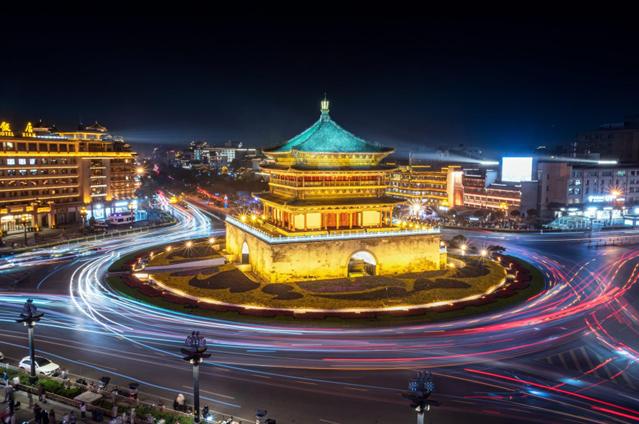
    Or admire the Bell Tower and the Drum Tower in the evening. The Bell Tower was built in 1384 and moved to its present site in 1582, while the Drum Tower is four years older — it was built in 1380.

    Meals: breakfast.

    In the morning, the Ci’en Temple and the Big Wild Goose Pagoda. The pagoda was built in 652, under the Tang dynasty, to house the Buddhist sutras that the monk Xuanzang brought back from India. It is the earliest and largest surviving pagoda of the Tang era. It originally had five storeys and now has seven, and it stands more than 64 metres high.

    Since 2014 the pagoda has been part of the UNESCO World Heritage Site “Silk Roads: the Routes Network of Chang’an-Tianshan Corridor”.

    Then the Shaanxi History Museum, opened in 1991. Its collection includes bronzes, ceramics and paintings from different eras, from the Zhou to the Tang, and one of its highlights is the murals from the tombs of the Tang-dynasty nobility.

    Meals: breakfast, lunch, dinner.

    In the morning, the Terracotta Army, part of the mausoleum of Qin Shi Huang — the first unifier of China, who died in 210 BC. Thousands of clay warriors and horses stand in three pits, the largest of which is Pit 1, and all the warriors are different. The army was found in 1974 by farmers digging a well. The mausoleum has been a UNESCO World Heritage Site since 1987.

    Then the terracotta warrior workshop: under a master’s guidance, you will try your hand at the ancient craft of pottery. This is not a shopping stop; the ticket is already included.

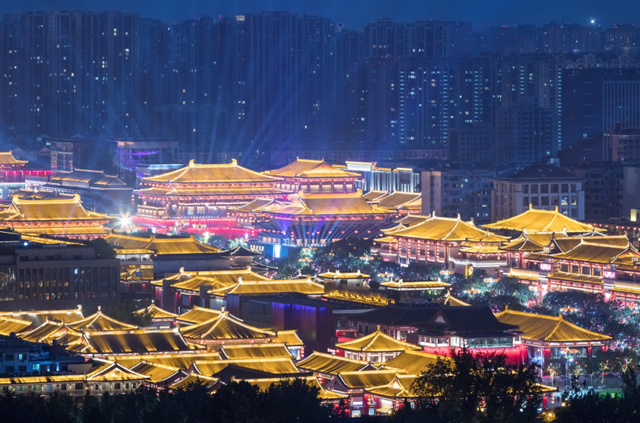
    In the evening, Grand Tang Everbright City (Datang Buyecheng), a Tang-style pedestrian street at the foot of the Big Wild Goose Pagoda. It stretches for 2.1 km, and in the evenings there are light shows and performances.

    Meals: breakfast, lunch, dinner.

    Breakfast at the hotel and a private transfer to Xi’an airport or railway station for your departure.

    Xi’an is one of those cities you want to return to the moment you leave. So this is not goodbye — just until next time.

    Meals: breakfast.

    Order a free consultation