Thirteen days with a Russian-speaking guide, following the spring: cherry blossom in Kyoto and at Mount Fuji, wisteria in Tokyo and Ashikaga, blue fields of nemophila in Hitachi and the late northern cherry blossom at Hirosaki Castle.

From ancient Kansai the route leads past Mount Fuji to Japan’s samurai north, a region tourists seldom reach.

    • Tour Type: Group, guide 24/7
    • Duration: 13 days
    • Excursions: 11
    • Difficulty: easy
    • Season: spring, cherry blossom and wisteria
    • Meals: breakfast daily, 1 dinner
    • Transportation: airport – hotel
    • Accommodation: 3* hotels, ryokan


    Upcoming Tour Dates

    apr
    13
    April 13, 2027


    What’s Included:

    • Russian-speaking guide 24/7
    • The full excursion programme
    • Hotel accommodation as per the programme, with breakfast
    • A night in a ryokan with kaiseki dinner
    • Transfer from the airport to the hotel
    • One-week JR Pass
    • ICOCA transport card
    • Mobile internet router (up to 5 devices)
    • Insurance

    What’s Not Included:

    • International flights
    • Meals not listed in the programme
    • Personal expenses


    Why Choose This Tour?

    Three blooms in one trip. Cherry blossom, wisteria and nemophila – spring from Kyoto all the way to the far north of Honshu.

    Japan’s north. Samurai Aizu, Matsushima Bay, Aomori or Hakodate, and Hirosaki with one of the most famous cherry blossom parks.

    Your guide is always close by. A Russian-speaking guide stays with the group around the clock.

    Everything for the road included. A one-week JR Pass, an ICOCA transport card, mobile internet and insurance.


    A detailed daily tour

    Thirteen unforgettable days across Japan, following the spring: cherry blossom in Kyoto and at Mount Fuji, wisteria in Tokyo and Ashikaga, the blue fields of nemophila in Hitachi and the late cherry blossom at Hirosaki Castle in the samurai north. Detailed day-by-day itinerary, eleven excursions, a Russian-speaking guide around the clock, a one-week JR Pass, an ICOCA card and mobile internet included, and comfortable small-group travel.

    3500 € Per person

    Tour Program

    Arrival in Osaka and transfer to your hotel. We recommend choosing a flight that lands no earlier than 13:00, as Japanese hotels check guests in from 15:00. A very late flight won’t work either, though – otherwise you’ll miss the first walk.

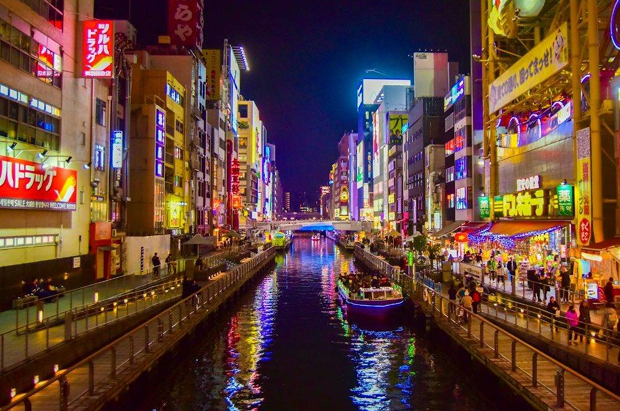
    At around 19:00 the group gathers in the hotel lobby: you’ll meet your guide and fellow travellers, and the guide will talk you through the programme. Then you’ll set off on your first evening stroll through Namba and along the Dotonbori canal. Digging began as far back as 1612, a district of theatres and teahouses grew up around it, and today it glows with Osaka’s most famous neon signs.

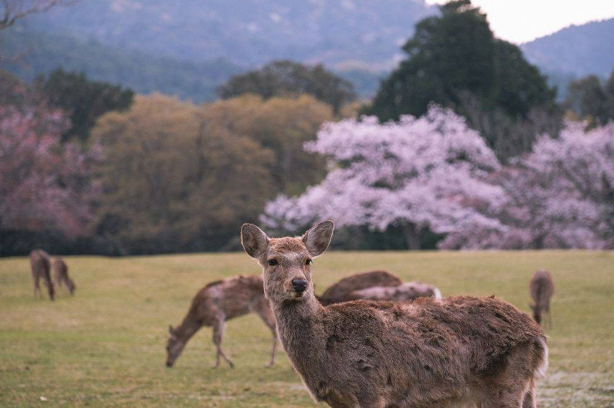
    In the morning you’ll travel to Nara, Japan’s capital in 710–784, and stroll among its sacred deer: legend has it that the god Takemikazuchi arrived here riding a white deer, and ever since the deer have been revered as messengers of the gods. At Todai-ji you’ll see the Great Buddha, almost 15 metres tall and unveiled in 752; its hall is one of the largest wooden buildings in the world. Kasuga Taisha was founded in 768 as the clan shrine of the Fujiwara, and some three thousand stone and bronze lanterns line its paths.

    After lunch you’ll head to Fushimi Inari Taisha, the head shrine of some 30,000 shrines to Inari, the deity of harvest and prosperity. Around 10,000 orange torii gates mark the trail up the sacred mountain, and foxes – Inari’s messengers – stand everywhere around the shrine.

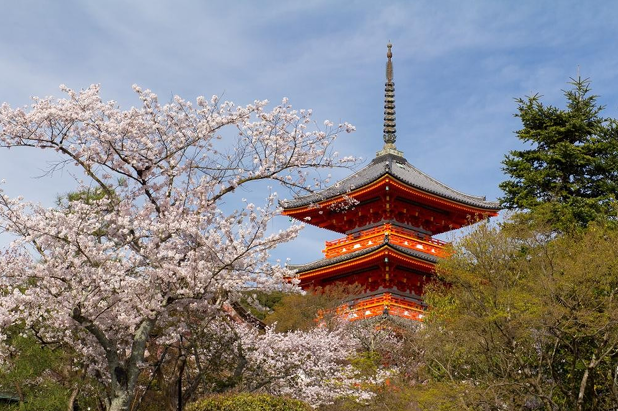
    The morning begins at Sanjusangen-do, the “hall of 33 bays”, some 120 metres long, which houses a thousand statues of the thousand-armed Kannon and one large seated figure; the hall and all its statues are designated National Treasures. Next you’ll head to Kiyomizu-dera (“Pure Water”), founded in 778 beside the Otowa spring. Its wooden stage, about 13 metres high, rests on pillars joined without a single nail.

    If you like, you can put on a kimono and stroll through the ancient Higashiyama district. After lunch and some free time you’ll walk through the geisha district of Gion and call in at Yasaka Shrine. In 869 people prayed here for deliverance from plague, and from that rite grew the famous Gion Matsuri festival.

    In the evening you’ll return to Osaka, where you can explore the Umeda district or relax at the hotel.

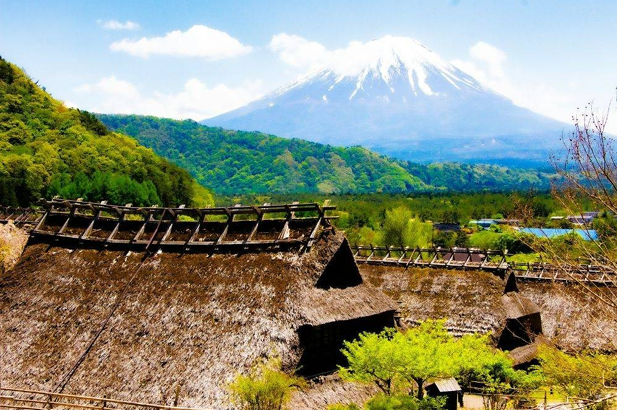
    In the morning you’ll travel to Kawaguchiko, in the Fuji Five Lakes area at the foot of Mount Fuji. At 3,776 metres it is the highest point in Japan, and in 2013 Mount Fuji was inscribed on the UNESCO list as a “sacred place and source of artistic inspiration”.

    You’ll visit the museum village of Saiko Iyashi-no-Sato. A village of thatched-roof houses once stood here, but in 1966 it was destroyed by a landslide; in 2006 it was rebuilt as an open-air museum where workshops practise traditional crafts. If you wish, you can also stop at the Aokigahara forest, which grew on the lava from the eruption of 864.

    You’ll spend the night in a ryokan, where guests sleep on futons. A kaiseki dinner of many successive courses and the hot springs await you.

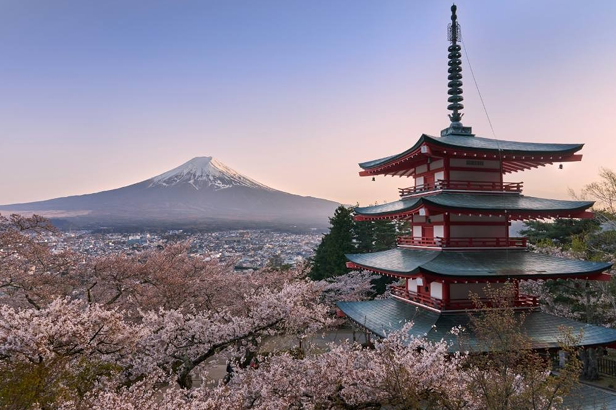
    In the morning you’ll walk along the lake and climb up to the Chureito Pagoda. It was built in 1962 in memory of the people of Fujiyoshida who died in the war, and 398 stone steps lead up to it. Some 650 cherry trees grow around it, and the five-storey pagoda in bloom against the backdrop of Mount Fuji is one of the most famous views in Japan.

    After lunch you’ll travel to Tokyo and check in to your hotel. In the evening a stroll through Shibuya awaits: skyscrapers, neon signs, the famous crossing where more than a thousand people cross on a single green light, and the statue of Hachiko, the faithful dog.

    Because of cloud, Mount Fuji is not visible every day.

    In the morning you’ll visit Kameido Tenjin Shrine, Tokyo’s premier spot for admiring wisteria. It was planted here as far back as the Edo period, and Utagawa Hiroshige depicted the arched bridges over the shrine’s ponds in his woodblock prints. The wisteria blooms in April.

    Then you’ll head to Asakusa and Senso-ji, Tokyo’s oldest temple: legend has it that its story began in 628 with a statuette of Kannon that fishermen found in the river. After a wander through the lanes of souvenir stalls, you’ll go for lunch in Akihabara, “Electric Town”, the capital of anime, manga and video games.

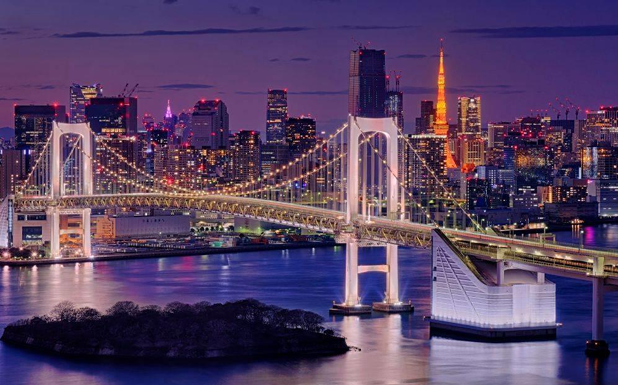
    In the afternoon you can choose between Odaiba, an island in Tokyo Bay with views of the Rainbow Bridge, and the nightlife district of Kabukicho, where Godzilla’s head rises above the rooftops of Shinjuku.

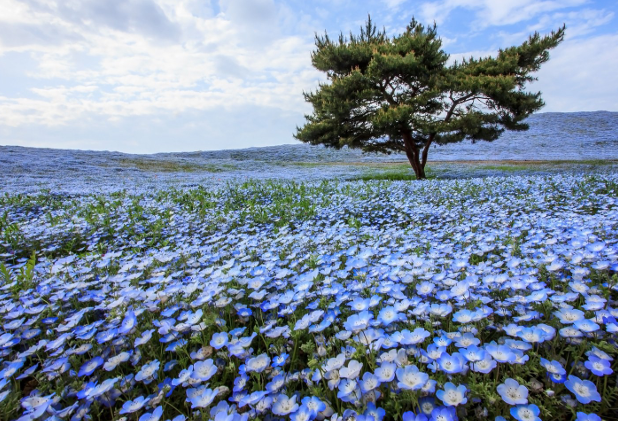
    In the morning you’ll arrive at Hitachi Seaside Park. From mid-April to early May some 5.3 million nemophila
    bloom here, and Miharashi Hill, covering about 4 hectares, turns into one unbroken field of blue.

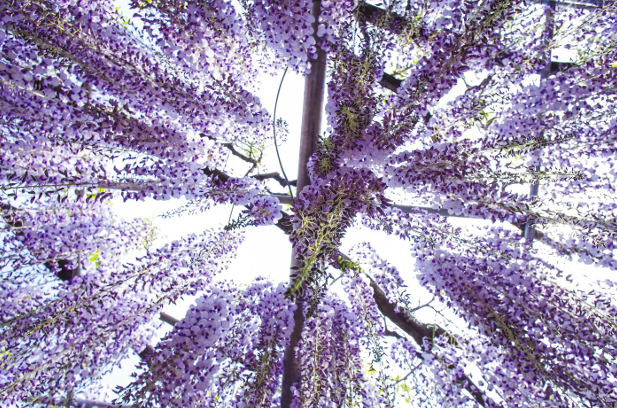
    Next you’ll head to Ashikaga Flower Park, famous for its wisteria. Its greatest wonder, the Great Wisteria, is
    more than 160 years old, and its trellis covers around a thousand square metres. In the 1990s the tree was
    moved to a new site; the work was carried out by Konami Tsukamoto, Japan’s first female arborist. During the
    festival more than 350 wisteria plants bloom here, and in 2014 CNN included the park in its list of the world’s
    “dream destinations”.

    In the afternoon you’ll travel to Utsunomiya, the acknowledged “gyoza capital”, and dine on these
    famous dumplings.

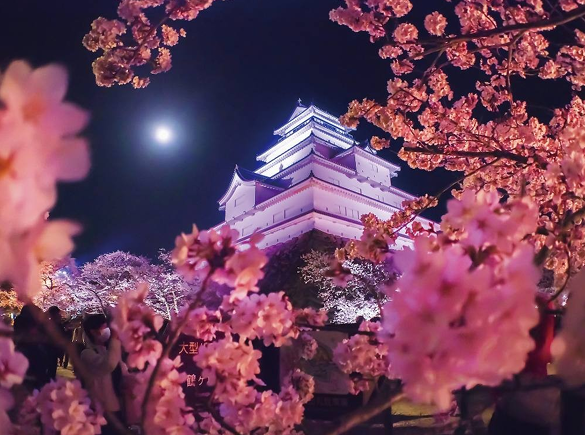
    In the morning you’ll travel to Aizu-Wakamatsu, a city of samurai valour and samurai tragedy. The first castle here was built in the 14th century. In 1868, during the Boshin War, Tsuruga Castle withstood a siege by government forces, yet afterwards Aizu surrendered all the same. In the Meiji era the castle was demolished; it was rebuilt in 1965, and in 2011 its roof was given back the red tiles it had at the time of the war. In spring cherry trees bloom beneath its walls.

    After lunch you’ll go up Mount Iimori, where the “White Tiger” unit met its end: twenty young men, seeing smoke over the town, believed the castle had fallen, and nineteen of them took their own lives, though the castle was still holding out. Here, too, stands the remarkable “seashell” pagoda Sazae-do, built in 1796: there are no stairs inside, just a wooden ramp in a double spiral, so the routes up and down never cross.

    In the evening you’ll travel on to Matsushima.

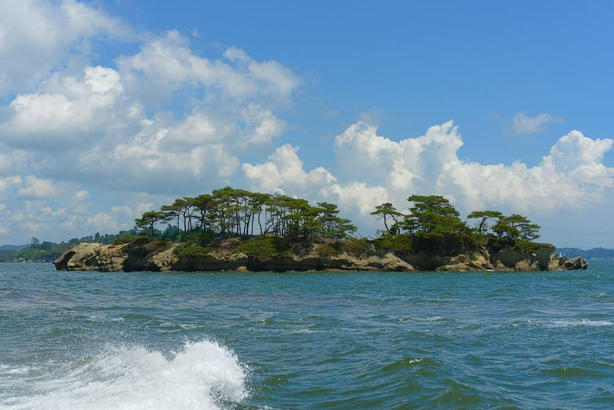
    In the morning you’ll set off on a boat trip around Matsushima Bay, one of the three famous views of Japan. The bay is scattered with some 260 pine-clad islets; in 1689 the poet Matsuo Basho came here and described the area in his travel journal “The Narrow Road to the Deep North”.

    You’ll wander around small, picturesque islands and taste oysters from local farms – Matsushima is famous for them throughout Japan.

    Towards evening you’ll travel on to Aomori.

    The day’s programme will be chosen according to the weather and how the cherry blossom is coming along.

    Aomori. At the mountain temple of Seiryu-ji sits the Showa-era Great Buddha, 21.35 metres tall – the largest seated bronze Buddha in Japan. Afterwards you’ll stroll along the waterfront and call in at A-FACTORY by the station, where cider is made from local apples right in the building, and at the Nebuta Museum Wa Rasse, home to real nebuta festival floats that won prizes at the Nebuta Matsuri.

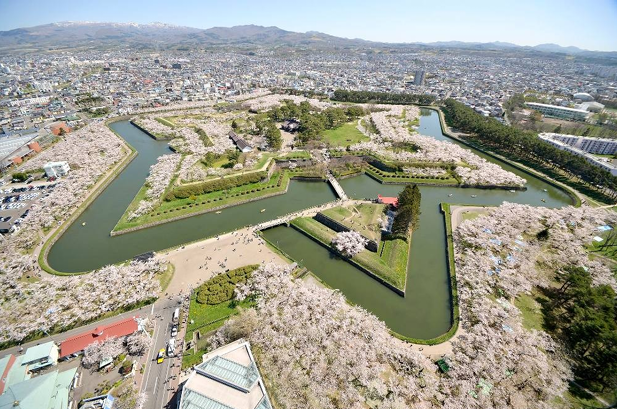
    Hakodate. It was here, in 1861, that St Nicholas of Japan began his ministry, and the Orthodox Church of the Resurrection grew out of the chapel of the Russian consulate; the present brick church was built in 1916. Then you’ll see the star-shaped fortress of Goryokaku – the last stronghold of the Republic of Ezo in 1868–1869, where some fifteen hundred cherry trees grow.

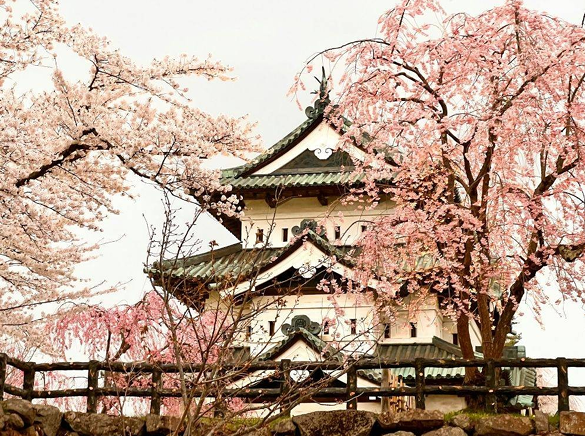
    In the morning you’ll travel to Hirosaki. The castle was completed in 1611 under the Tsugaru lords, and the present three-tiered keep was built in 1810; it is one of the twelve Japanese castles that retain their original main keep. Around 2,600 cherry trees of some fifty varieties grow in the park around it – one of the most famous cherry blossom spots in Japan. The first thousand trees were planted here by former samurai in 1882, and the fallen petals cover the moat in an unbroken pink carpet.

    You’ll walk through the samurai quarter north of the castle and enjoy a short concert of Tsugaru-shamisen. This style was created by wandering musicians: the strings are struck so hard that the plectrum hits the body of the instrument.

    In the evening you’ll return to Tokyo.

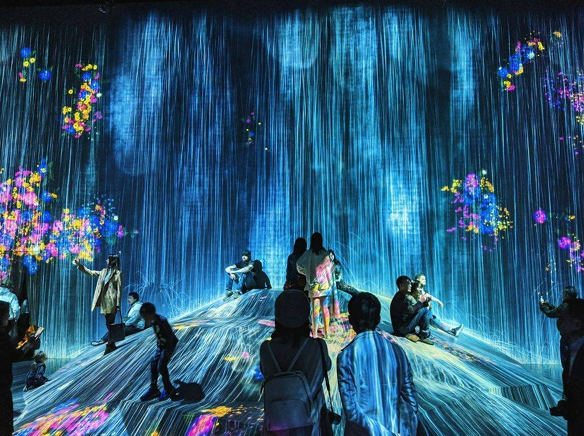
    This day is free for shopping, favourite neighbourhoods and anything you haven’t yet had time for. You could, for instance, visit teamLab Planets, a digital art museum whose rooms you explore barefoot, in places wading right through water, or the Harry Potter studio tour.

    It is also a reserve day: if the wisteria in Ashikaga blooms later than usual, the trip to the park will be moved to this day.

    Order a free consultation