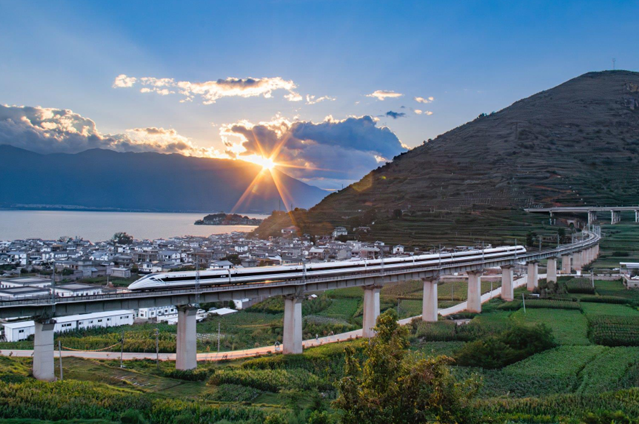
Nine days and five completely different Chinas. Multi-level Chongqing, where a monorail runs through a residential building. The stone bridges of Wulong, familiar from “Transformers”. The rock pillars of Zhangjiajie, which look like the floating mountains of “Avatar”. The ancient town of Fenghuang on the Tuojiang River and modern Guangzhou.

A route with no backtracking: every transfer goes forward, to a new place, by high-speed train or private car.

A Russian-speaking guide, private transport, high-speed trains, entrance tickets, cable cars and the Bailong Elevator are already included in the price.

    • Tour Type: Group Tour
    • Duration: 9 days
    • Program: 5 excursions days 
    • Guide: Russian-speaking
    • Group size: up to 10 people
    • Meals: 8 breakfasts, 5 lunches, 5 dinners
    • Transportation: private, high-speed trains
    • Accommodation: twin rooms, 8 nights


    Upcoming Tour Dates

    apr
    10
    April 10, 2027


    What’s Included:

    • Accommodation: 8 nights, Chongqing (3), Zhangjiajie (3), Fenghuang (1), Guangzhou (1)
    • Meals: 8 breakfasts, 5 lunches, 5 dinners
    • Russian-speaking guide on all excursion days
    • Private transport: excursions, all transfers and the Zhangjiajie → Fenghuang transfer
    • High-speed trains Chongqing → Zhangjiajie and Fenghuang → Guangzhou
    • Entrance tickets, cable cars, the Bailong Elevator, the escalator at Tianmen, transport inside the parks, a boat ride on the Tuojiang and the “Romance of Zhangjiajie” show
    • Medical and baggage insurance

    What’s Not Included:

    • Flights to Chongqing and from Guangzhou
    • Meals not specified in the program
    • Personal expenses and tips


    Why Choose This Tour?

    The “Avatar” mountains. Zhangjiajie National Forest Park is China’s first national forest park and a UNESCO World Heritage Site: more than 3,000 quartz sandstone pillars, many over 200 meters tall. In 2010 one of them was officially renamed “Avatar Hallelujah Mountain”.

    Wulong from the movies. The stone bridges and sinkholes of Wulong are part of the UNESCO site “South China Karst”. “Transformers: Age of Extinction” and Zhang Yimou’s “Curse of the Golden Flower” were filmed here.

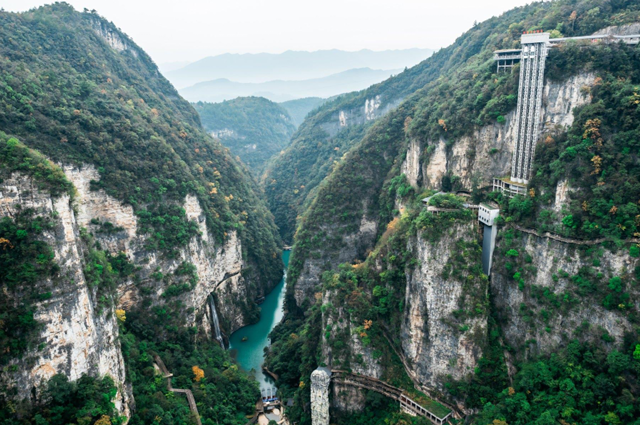
    The tallest outdoor elevator in the world. The Bailong Elevator rises 326 meters up a sheer cliff in under two minutes, a Guinness World Record.

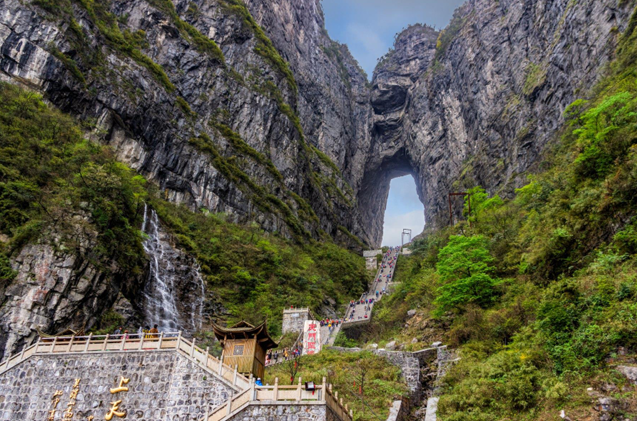
    Heaven’s Gate. A cable car almost 7.5 km long takes you up Tianmen Mountain. At the top are a glass walkway over the precipice and the natural arch of Heaven’s Gate, 131.5 meters high.

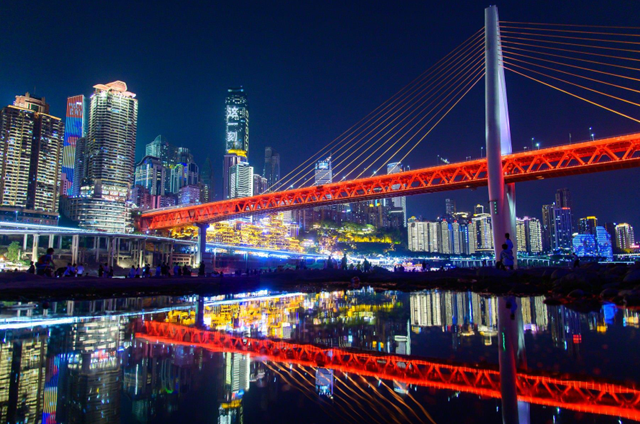
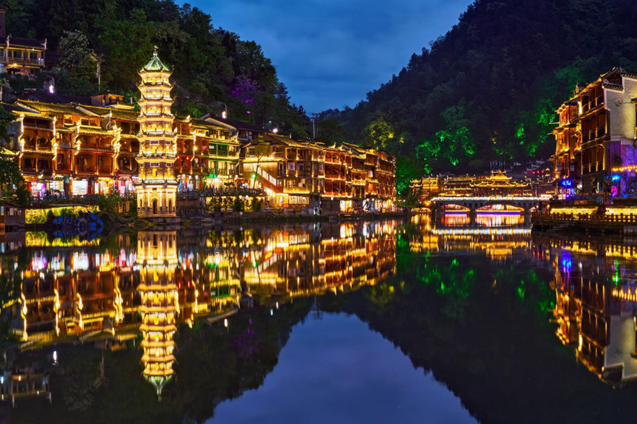
    Hongyadong and Fenghuang. Hongyadong in the evening is 11 tiers of stilted houses above the Jialing River. And Fenghuang was called one of the two most beautiful small towns in China by the New Zealander Rewi Alley.


    A detailed daily tour

    Nine unforgettable days across China, from the layered mountain city of Chongqing and the stone bridges of Wulong to the “Avatar” mountains of Zhangjiajie, the Heaven’s Gate of Tianmen and the ancient town of Fenghuang, finishing in modern Guangzhou. Detailed day-by-day itinerary, five guided excursion days, high-speed trains, all entrance tickets, cable cars and the Bailong Elevator included, and comfortable small-group travel.

    from 1700 € Per person

    Tour Program

    Chongqing is the first stop on the route. It is called the Mountain City and the City of Fog: it stands on hills at the confluence of the Yangtze and the Jialing, its streets lie in tiers one above another, and you can enter the same building from the street on both the first floor and the twelfth. The Chongqing municipality is home to almost 32 million people.

    At Jiangbei Airport a driver with a name sign will meet you and take you to a hotel in the city center. The evening is free.

    Meals: not included

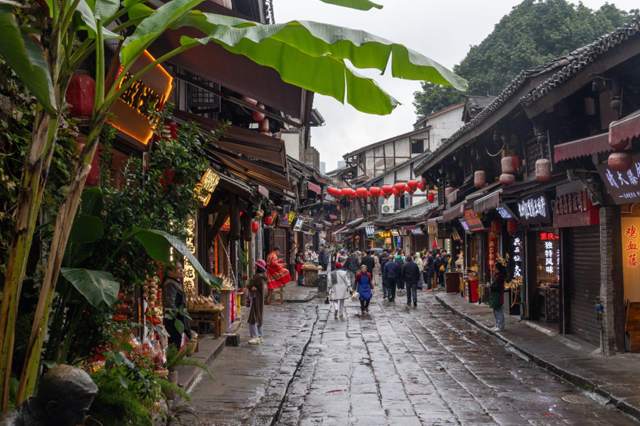
    In the morning, Ciqikou, a town more than a thousand years old. Its name means “Porcelain Harbor”: blue-and-white porcelain was shipped from here down the river. It used to be called Longyin, “Where the Dragon Hid”: according to legend, the deposed Ming emperor Jianwen hid here. Stone-paved streets, houses from the Ming and Qing eras, Sichuan snacks and traditional teahouses.

    In the afternoon, Liziba Station. The Line 2 monorail passes straight through a 19-story residential building: shops at the bottom, the station on floors 6–8, apartments above. The building and the station were built together, and the rubber-tired trains run almost silently. From the viewing platform people take a trendy photo: a person “biting” the train as it emerges from the building.

    In the evening, Jiefangbei, the “Liberation Monument” in the very heart of the city. It was erected in 1947 to commemorate the victory in the war against Japan; throughout the war years Chongqing was China’s wartime capital. From there, back to Hongyadong to photograph the night lights from different angles.

    Meals: breakfast, lunch, dinner.

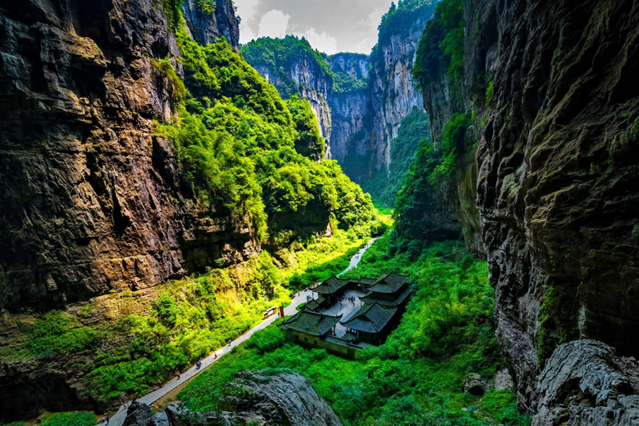
    About three hours’ drive, and you are in Wulong. It is part of the UNESCO World Heritage Site “South China Karst”: the limestone mountains here are cut through by giant sinkholes (tiankeng) and natural bridges.

    The highlight is the Three Natural Bridges, all three named after dragons: Tianlong, “Heavenly”, Qinglong, “Azure”, and Heilong, “Black”. The stone arches are between 223 and 281 meters high.

    Wulong is familiar from the movies: “Transformers: Age of Extinction” was filmed here, and at the bottom of the sinkhole stands the Tianfu post station, where Zhang Yimou’s “Curse of the Golden Flower” was filmed. Then the Longshuixia Gorge, another karst canyon of Wulong. In the evening we return to Chongqing.

    Meals: breakfast, lunch, dinner.

    In the morning, transfer to Chongqing West Station and a high-speed train to Zhangjiajie West, about 3.5 hours on the way. You will be met at the station and taken to the hotel.

    You will spend three nights in a row here, without changing hotels: tomorrow, Zhangjiajie National Park, the day after, Tianmen Mountain.

    Zhangjiajie is the land of the Tujia and Miao peoples, whose customs you will see tomorrow evening at a show. Today the evening is free, a good time to try Hunan cuisine, which is famous for its spicy dishes.

    Meals: breakfast.

    A full day in Zhangjiajie National Park. It is China’s first national forest park, opened in 1982, and part of the UNESCO World Heritage Site Wulingyuan: more than 3,000 quartz sandstone pillars, many over 200 meters tall.

    On the Bailong Elevator we rise 326 meters in under two minutes: for about half of the way the shaft runs inside the rock, and the rest is in a glass cabin up a sheer wall. It is the tallest outdoor elevator in the world according to the Guinness World Records.

    At the top is the Yuanjiajie area and the “Avatar” viewing platform. One of the pillars here was officially renamed “Avatar Hallelujah Mountain” in 2010, so much do these rocks resemble the floating mountains from the film. Next is Tianzi Mountain, named, according to legend, after the Tujia chieftain Xiang Dakun, who proclaimed himself the “Son of Heaven”. The program also includes the Tianzi and Huangshizhai cable cars, the mini-train through the “Ten-Mile Gallery” gorge and a walk along the Golden Whip Stream.

    In the evening, the show “Romance of Zhangjiajie”: the customs, stunts and mountain legends of the Tujia and Miao peoples.

    Meals: breakfast, lunch, dinner.

    A cable car almost 7.5 km long takes you almost 1,300 meters up Tianmen Mountain. At the top are a glass walkway over the abyss and a view from above of the Tongtian serpentine road: 11 kilometers and 99 bends.

    Heaven’s Gate is a natural arch 131.5 meters high and 57 meters wide. The Chinese chronicle “Shui Jing Zhu” (Commentary on the Water Classic) reports that in 263 a cave “as bright as a gate” opened in the mountain, and the ruler of the kingdom of Wu took it as a good omen. In 1999 stunt planes flew through the arch, and later the wingsuit flying world championships were held here.

    999 steps lead up to the arch. A one-way ticket for the escalator inside the mountain is included.

    Meals: breakfast, lunch, dinner.

    A transfer by private car to Fenghuang. Its name means “phoenix”; the town was founded in 1704, under the Qing dynasty, and the Miao and Tujia peoples live here. Since 2008 Fenghuang has been on UNESCO’s Tentative List of World Heritage Sites.

    In the afternoon, a walk with a guide. Wooden stilted houses along the Tuojiang River, stone alleys, the Wanming Pagoda and the covered Hong Bridge (Hongqiao) made of local red stone: the first bridge on this site was built in 1670, and in 1914 it was rebuilt and given its present name. The writer Shen Congwen was born here in 1902.

    Then a ride on a wooden boat on the Tuojiang. The New Zealander Rewi Alley called Fenghuang one of the two most beautiful small towns in China. We spend the night in the old town.

    Meals: breakfast, lunch, dinner.

    The morning is free for walks and photography in Fenghuang.

    In the afternoon, transfer to the station and a high-speed train to Guangzhou; you will be met at the station and taken to the hotel.

    The evening is free. A good time to try Cantonese dim sum: the main ones are shrimp dumplings, siu mai, char siu buns and egg tarts. Tea is traditionally ordered with them, and here you thank someone for pouring your tea by tapping your fingers on the table.

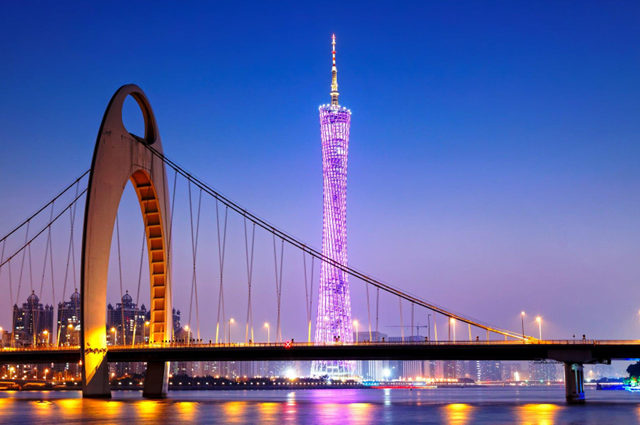
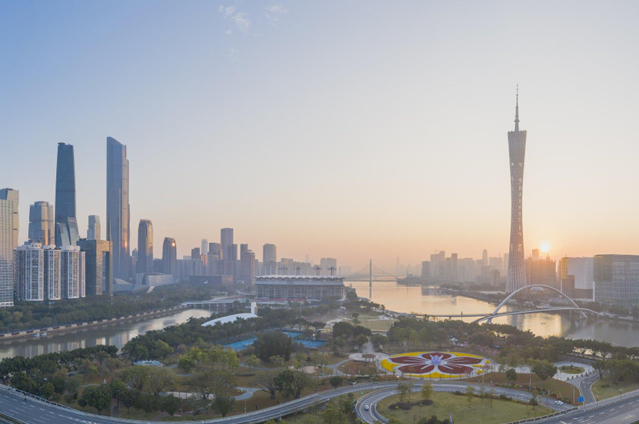
    And then, see the Guangzhou TV Tower lit up in the evening: 600 meters tall, opened in 2010, and nicknamed the “slim waist” for its graceful silhouette. When the tower opened, it was the tallest TV tower in the world.

    Meals: breakfast.

    Breakfast at the hotel and an individual transfer to Guangzhou Airport for your departure.

    China is one of those countries you want to return to as soon as you leave. So this is not goodbye, but see you again.

    Meals: breakfast.

    Frequently Asked Questions

    Have questions about tours, bookings, or documents? We've gathered answers to the most common questions to make your trip as smooth and worry-free as possible.

    • 14. How flexible is the itinerary, and how much free time will we have?

      The tour is rich in experiences, but in some evenings you’ll have free time to rest or explore independently without disrupting the schedule.

    • 15. What are the baggage rules for domestic flights?

      Typically, one checked bag of 15–23 kg and one carry-on up to 8 kg are allowed. Limits vary by airline, but we’ll provide all details in advance.

    • 16. What is the role of the guide?

      You’ll be accompanied by a tour leader responsible for organization and logistics. In each city or national park, local professional guides will provide in-depth knowledge and unique insights.

    • 17. Are there opportunities for photography, and can I use drones?

      Yes, there will be countless photo opportunities, and guides will recommend the best spots. However, drones are prohibited in most national parks, including Iguazú and Los Glaciares.

    • 18. What climate should we expect, and what clothing should we bring?

      Your trip takes place in Argentine spring/fall, but climates vary greatly along the route. Dress in layers: warm clothes and windbreakers for Patagonia, light breathable clothing for the hot, humid Iguazú tropics, and warm, sun-protective gear for the high-altitude Puna.

    • 19. What’s the best way to exchange money?

      The local currency is the Argentine peso (ARS). We recommend bringing cash in USD or EUR to exchange at the favorable “blue” rate. In remote regions, especially in the north, cash may be the only payment option. We’ll help with exchanges upon arrival.

    • 20. What are the main safety rules?

      Argentina, like much of Latin America, has higher crime rates than Europe, mostly petty theft. By following simple precautions, you’ll stay safe:
      • Avoid wearing expensive jewelry or watches.
      • Always keep an eye on your bag, especially in crowds and on public transport.
      • Use hotel safes for valuables.
      • Avoid visiting unsafe neighborhoods (“villas”) or walking alone at night in poorly lit areas.

    • 21. In what language will the tour be conducted?

      Local guides speak English and Spanish. The tour leader speaks Russian, Spanish, and English, and will provide translation into Russian if needed.

    • 22. Do I need a visa for Argentina?

      Visa requirements depend on your nationality. For citizens of the USA, EU, and most CIS countries (including Russia), a tourist visa is not required for stays up to 90 days. Please always check the latest requirements for your country.

    • 23. What are the tipping rules in Argentina?

      Tipping is expected but not mandatory. In restaurants, 10% is customary. In cafés, small change is fine. Taxi drivers don’t expect tips, but rounding up is common.

    • 24. Do I need any vaccines?

      No vaccines are mandatory for entry. However, since the trip includes the tropical Iguazú region, the WHO recommends vaccination against yellow fever.

    • 25. Is travel insurance mandatory?

      It is not required for entry into Argentina, but we strongly recommend purchasing it for your safety and peace of mind.

    • 26. What about electricity and connectivity?

      Argentina uses 220V and Type I plugs (three flat prongs). Bring a universal adapter. Wi-Fi is available in most hotels, though coverage may be weak in remote areas (Puna, El Chaltén). A local SIM card is recommended for reliable mobile connection.

    • 27. What souvenirs can I bring back from Argentina?

      Argentina is famous for leather goods, wine, mate sets, and sweets such as dulce de leche. In the highlands, you’ll also find beautiful wool products.

    Order a free consultation