Tokyo – Nikko – Nara – Osaka – Kyoto – Kawaguchiko.

November in Japan is the country at the height of autumn. Crimson momiji maple leaves blaze across the landscape, Mount Fuji receives its first snowfall, and the air becomes crystal clear unlike anywhere else in the world. Over the course of seven days, this journey will take you from the neon-lit crossings of Tokyo to the peaceful temples of Kyoto, from a traditional ryokan at the foot of Mount Fuji to the historic streets of Nara, where friendly deer feed from your hand. We have brought together everything worth traveling to Japan for in a single itinerary, while also including experiences that usually remain beyond the standard tourist routes.

  • Tour Type: Group Tour, Small Groups
  • Duration: 8 days
  • Group Size: Up to 10-15 people
  • Language: Russian


    Upcoming Tour Dates

    NOV
    14
    From November 14 to 21, 2026


    What’s Included:

    • Visa support
    • Travel medical insurance
    • Portable Wi-Fi router
    • Accommodation in hotels as specified in the itinerary, including breakfast
    • Dinner at the ryokan
    • 7-day rail pass
    • Guided sightseeing tours according to the itinerary with a Russian-speaking guide

    What’s Not Included:

    • Hotel accommodation tax: 100–200 yen (approximately $1–2) per person per night, payable in cash at the hotel reception
    • Onsen (hot spring) tax: 150 yen (approximately $1.50) per person per night, payable in cash at the hotel reception
    • International flights
    • Entrance fees and personal expenses
    • Trip cancellation insurance
    • Meals not explicitly specified in the itinerary


    Why Choose This Tour?

    Five cities in one journey. From the electric energy of Tokyo to the tranquil atmosphere of Kyoto, from Nara with its famous deer to Osaka, renowned for its incredible street food. We have combined Japan’s most iconic destinations into a well-paced itinerary that is full without feeling rushed.

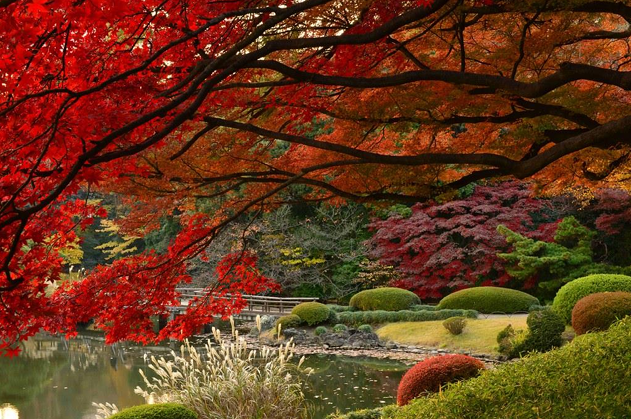
    The perfect season. November is the season of momiji, when Japan’s maple trees turn brilliant shades of red. The crowds of the cherry blossom season have already disappeared, temperatures are ideal for long walks, and Mount Fuji is crowned with its first snow.

    A night in a ryokan and a kaiseki dinner. Stay in a traditional Japanese inn with tatami floors and futon bedding, enjoy an authentic multi-course kaiseki dinner, and relax in an open-air onsen hot spring—an experience that no ordinary hotel can offer.

    Two sides of Japan in one trip. Discover ultra-modern Tokyo with its skyscrapers and Akihabara, then explore the ancient capitals of Nara and Kyoto, filled with temples, gardens, and historic geisha districts. This striking contrast is one of the main reasons travelers fall in love with Japan.

    The comfort of a small group. Travel in a small group with a Russian-speaking guide throughout the entire itinerary, a 7-day rail pass, and carefully planned logistics—so there’s no need to rush between stations carrying your luggage.


    A detailed daily tour

    An 7-day journey through Japan's timeless traditions and breathtaking landscapes — from the vibrant streets of Tokyo and the sacred shrines of Nikko to the ancient temples of Kyoto, the friendly deer of Nara, the majestic beauty of Mount Fuji, and the lively atmosphere of Osaka.

    2500 € Per person

    Tour Program

    Arrival in Tokyo and a group transfer from the airport to the hotel. After a short rest, we meet in the lobby at 7:00 PM to get acquainted with the group, go over the organizational details, and discuss the plans for the week ahead.

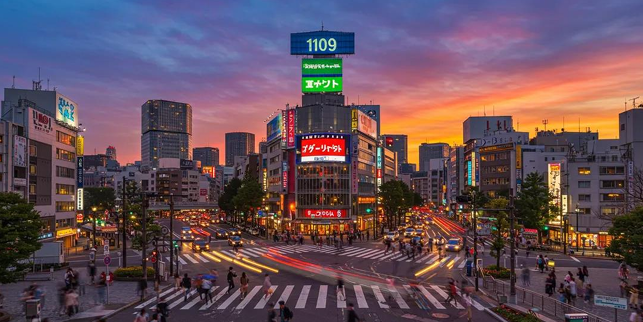
    In the evening, we head to Shibuya—the heart of modern Tokyo. We will walk across the world-famous Scramble Crossing, where up to 3,000 people can cross the intersection simultaneously during a single traffic light cycle, stop by the statue of the loyal dog Hachikō, and immerse ourselves in the streams of neon signs and towering skyscrapers.

    The first evening is intentionally kept simple: no museums, no long walks, and no information overload. Tokyo is best experienced in motion, so we begin with a leisurely stroll rather than a guided tour. The details will come tomorrow morning.


    The morning begins in Ueno Park, one of Tokyo’s largest green spaces, renowned for its beautiful maple trees. We will visit Ueno Tōshō-gū, a Shinto shrine, and Benten-dō, a Buddhist temple, located just a short walk from one another, offering a clear illustration of how Japan’s two major religions coexist.

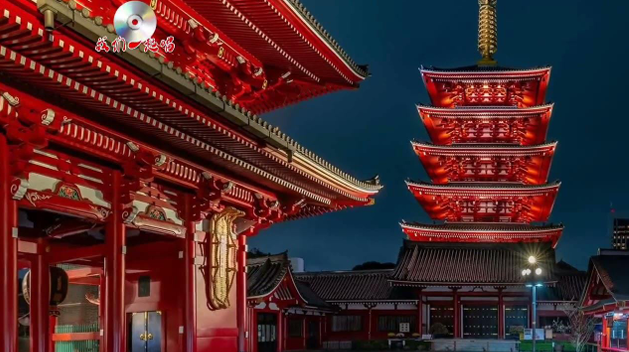
    Next, we continue to Asakusa to visit Sensō-ji, Tokyo’s oldest temple, and stroll along the lively Nakamise Shopping Street, famous for its souvenirs and traditional street food. Lunch will be in Akihabara—the capital of anime, manga, and everything related to Japanese pop culture.

    In the evening, we explore Kabukichō, Tokyo’s famous nightlife district, see the iconic 3D cat known across the internet, and wander through the tiny alleyways of Golden Gai, where most bars can accommodate no more than six guests. For those who enjoy discovering the true soul of a city, there is no better place in Tokyo.


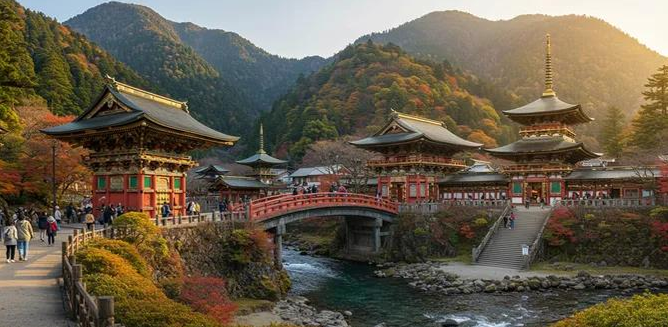
    Today we travel to Nikkō, a city often referred to by the Japanese as the “Kyoto of the North.” Our main destination is the Nikkō Tōshō-gū Shrine, the resting place of the legendary shogun Tokugawa Ieyasu, founder of the Tokugawa dynasty, whose rule lasted for more than two and a half centuries.

    We will also walk through Nikkō National Park—a place where Japan’s natural beauty looks exactly as many imagine it: mountain rivers, waterfalls, and brilliant red maple trees surrounding ancient shrines. Those who wish may also visit Edo Wonderland, a theme park dedicated to the Edo period, featuring live samurai and ninja performances.

    On the way back, we stop in Utsunomiya, known as Japan’s “Gyoza Capital.” Dinner is dedicated entirely to these famous dumplings, served with soy sauce, vinegar, and chili pepper—the traditional way they have been prepared here for over half a century.

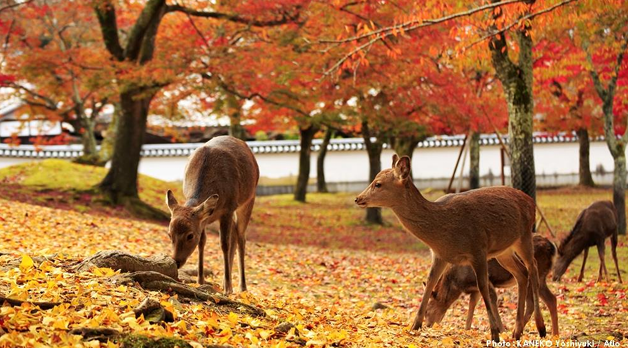
    In the morning, we travel to Nara, one of Japan’s ancient capitals. This compact city is famous for its sacred spotted deer, which roam freely through the streets and parks. Around a thousand deer live here; they approach visitors, bow in exchange for a deer cracker, and occasionally nibble on maps and guidebooks.

    We will visit Tōdai-ji, a temple that for centuries was considered the largest wooden building in the world and houses the enormous Great Buddha. We will then continue to Kasuga Taisha, the ancestral shrine of the Fujiwara clan, renowned for the three thousand stone and bronze lanterns lining its pathways.

    After lunch, we travel to Osaka and take a walk through Namba, the city’s liveliest and most energetic district. Osaka is considered Japan’s culinary capital, and Namba is its showcase: takoyaki, okonomiyaki, the giant mechanical crab above a restaurant entrance, and the iconic neon Glico Running Man racing eternally toward the finish line.

    In the morning, we travel to Kyoto. Our first stop is Sanjūsangen-dō, the “Temple of Thirty-three Bays,” where the long main hall houses 1,001 statues of the goddess Kannon—a breathtaking sight that leaves a lasting impression.

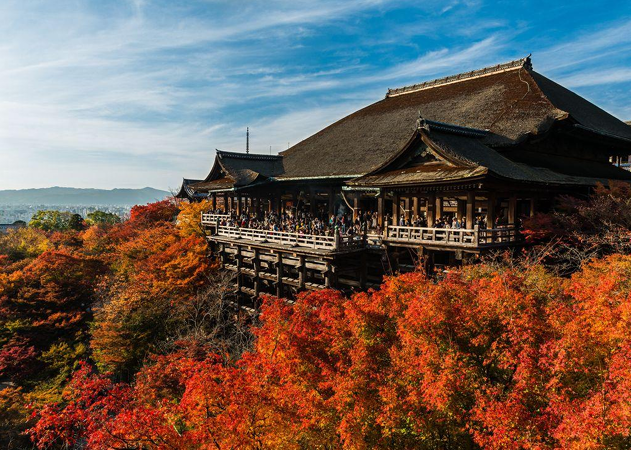
    Next, we visit Kiyomizu-dera, the “Pure Water Temple,” perched on a mountainside overlooking Kyoto, offering spectacular panoramic views of the city’s historic districts. Those who wish may rent a kimono and stroll through Higashiyama, the preserved historical quarter lined with traditional wooden houses dating back to the Edo period.

    After lunch and some free time for shopping, we take a walk through Gion, Kyoto’s famous geisha district. At dusk, we visit Fushimi Inari Taisha, Japan’s most mystical shrine, where a mountain trail passes beneath thousands of vermilion torii gates. With the crowds nearly gone by evening, it feels as though you have stepped through a portal into another world.

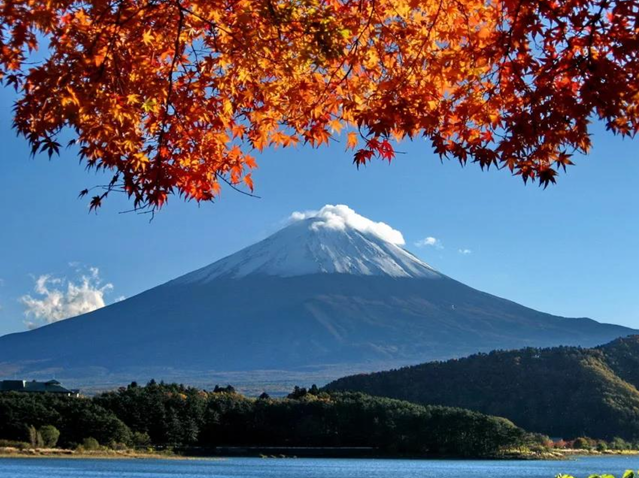
    In the morning, we travel to Kawaguchiko, one of the Fuji Five Lakes at the foot of Mount Fuji. If the skies are clear, the mountain reveals itself in its iconic postcard-perfect form: a snow-capped triangular peak reflected in the still waters of the lake. November is the ideal time to experience this view, as the air is dry and exceptionally clear, making Mount Fuji far more likely to be visible than during the cloudy summer months.

    We check into a traditional Japanese ryokan. The floors are covered with tatami mats, futons are laid out for sleeping in the evening, guests are provided with yukata robes, and dinner features an authentic multi-course kaiseki meal prepared with seasonal ingredients and beautifully presented on individual pieces of tableware.

    Before dinner, there is time for a walk along the lakeshore and a relaxing soak in an open-air onsen hot spring. If the weather cooperates, you may even enjoy views of Mount Fuji while bathing. Spending the night on futons is an experience in itself—one best approached with an open mind. Many travelers admit they sleep even better in a ryokan than in a five-star hotel.

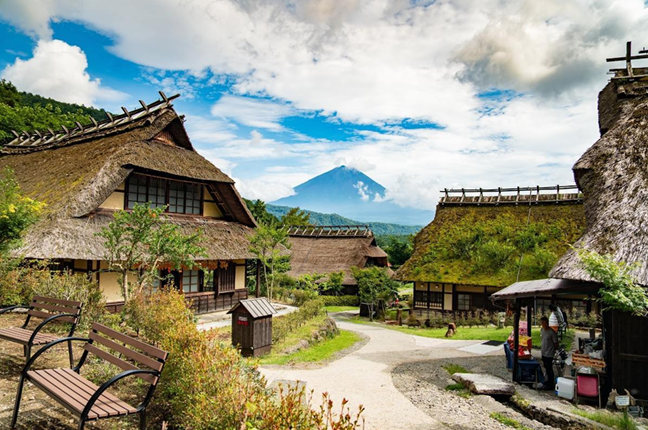
    In the morning, we visit Saiko Iyashi-no-Sato Nenba, a restored traditional village featuring historic gassho-style houses with steep, multi-layered thatched roofs. Here, we discover traditional Japanese craftsmanship, including handmade ceramics, glassware, copperwork, and silk products. Rather than being a museum reconstruction, these are working artisan workshops where you can watch the craftspeople at work, interact with them, and purchase their creations.

    After lunch, we continue to Aokigahara, the famous forest at the foot of Mount Fuji. Although the forest has gained an unfortunate reputation, our destination is something entirely different: an ice cave hidden beneath the forest, where temperatures remain so low that even in late autumn a warm sweater is recommended.

    We then return to Tokyo for a farewell evening. Enjoy some free time to shop for souvenirs, have one last dinner in Japan, or perhaps take one more ride on the Tokyo subway—just to prove to yourself that you’ve finally learned how not to get lost.

    In the morning, there is time for anything you may have missed earlier in the trip: tossing one final coin into a temple offering box, enjoying one last cup of matcha at a neighborhood café, picking up a few more souvenirs in Shinjuku, or simply having a relaxed breakfast with no plans for the day.

    For those who want to explore a little more, your guide can recommend additional neighborhoods beyond the itinerary, such as Yanesen, Odaiba, or Ginza.

    In the afternoon, a group transfer takes you to the airport for your flight home.

    Most travelers leave Japan with a suitcase containing a couple of ceramic cups they never intended to buy, several packets of matcha for family and friends, a selection of uniquely flavored KitKat bars that cannot be found anywhere else, and the quiet certainty that they will return—perhaps with a different itinerary, in another season, and maybe with different companions.

    Japan is one of those rare countries you leave already planning your next visit. So this is not goodbye—it’s simply, until we meet again.

    Frequently Asked Questions

    Have questions about tours, bookings, or documents? We've gathered answers to the most common questions to make your trip as smooth and worry-free as possible.

    • 14. How flexible is the itinerary, and how much free time will we have?

      The tour is rich in experiences, but in some evenings you’ll have free time to rest or explore independently without disrupting the schedule.

    • 15. What are the baggage rules for domestic flights?

      Typically, one checked bag of 15–23 kg and one carry-on up to 8 kg are allowed. Limits vary by airline, but we’ll provide all details in advance.

    • 16. What is the role of the guide?

      You’ll be accompanied by a tour leader responsible for organization and logistics. In each city or national park, local professional guides will provide in-depth knowledge and unique insights.

    • 17. Are there opportunities for photography, and can I use drones?

      Yes, there will be countless photo opportunities, and guides will recommend the best spots. However, drones are prohibited in most national parks, including Iguazú and Los Glaciares.

    • 18. What climate should we expect, and what clothing should we bring?

      Your trip takes place in Argentine spring/fall, but climates vary greatly along the route. Dress in layers: warm clothes and windbreakers for Patagonia, light breathable clothing for the hot, humid Iguazú tropics, and warm, sun-protective gear for the high-altitude Puna.

    • 19. What’s the best way to exchange money?

      The local currency is the Argentine peso (ARS). We recommend bringing cash in USD or EUR to exchange at the favorable “blue” rate. In remote regions, especially in the north, cash may be the only payment option. We’ll help with exchanges upon arrival.

    • 20. What are the main safety rules?

      Argentina, like much of Latin America, has higher crime rates than Europe, mostly petty theft. By following simple precautions, you’ll stay safe:
      • Avoid wearing expensive jewelry or watches.
      • Always keep an eye on your bag, especially in crowds and on public transport.
      • Use hotel safes for valuables.
      • Avoid visiting unsafe neighborhoods (“villas”) or walking alone at night in poorly lit areas.

    • 21. In what language will the tour be conducted?

      Local guides speak English and Spanish. The tour leader speaks Russian, Spanish, and English, and will provide translation into Russian if needed.

    • 22. Do I need a visa for Argentina?

      Visa requirements depend on your nationality. For citizens of the USA, EU, and most CIS countries (including Russia), a tourist visa is not required for stays up to 90 days. Please always check the latest requirements for your country.

    • 23. What are the tipping rules in Argentina?

      Tipping is expected but not mandatory. In restaurants, 10% is customary. In cafés, small change is fine. Taxi drivers don’t expect tips, but rounding up is common.

    • 24. Do I need any vaccines?

      No vaccines are mandatory for entry. However, since the trip includes the tropical Iguazú region, the WHO recommends vaccination against yellow fever.

    • 25. Is travel insurance mandatory?

      It is not required for entry into Argentina, but we strongly recommend purchasing it for your safety and peace of mind.

    • 26. What about electricity and connectivity?

      Argentina uses 220V and Type I plugs (three flat prongs). Bring a universal adapter. Wi-Fi is available in most hotels, though coverage may be weak in remote areas (Puna, El Chaltén). A local SIM card is recommended for reliable mobile connection.

    • 27. What souvenirs can I bring back from Argentina?

      Argentina is famous for leather goods, wine, mate sets, and sweets such as dulce de leche. In the highlands, you’ll also find beautiful wool products.

    Order a free consultation