Thirteen days across the whole of central Japan: Tokyo and Mount Fuji, ancient Nara and Kyoto, the White Heron Castle in Himeji, Nagoya, “Crow Castle” in Matsumoto and Zenko-ji temple in Nagano.


The programme includes eight excursions with a Russian-speaking guide, journeys on high-speed trains and free days in Kyoto and Tokyo.

    • Tour Type: group
    • Duration: 13 days
    • Excursions:8 guided
    • Difficulty: easy
    • Season: spring
    • Meals: breakfast daily, 5 lunches, 1 dinner
    • Transportation: airport – hotel – airport
    • Accommodation: 2*/3* hotels


    Upcoming Tour Dates

    mar
    14
    March 14, 2027

    mar
    28
    March 28, 2027

    apr
    11
    April 11, 2027


    What’s Included:

    • Group transfer: airport – hotel – airport
    • Hotel accommodation as per the programme,
      with breakfast
    • 8 group excursions with a Russian-speaking guide
      and entrance tickets
    • 5 lunches as per the programme and dinner at
      the hotel in Atami
    • Transport during excursions
    • Train tickets between cities as per
      the programme

    What’s Not Included:

    • International flights
    • Medical insurance
    • City accommodation tax and onsen tax
    • Optional excursions
    • Personal expenses


    Why Choose This Tour?

    The most complete programme. Ten cities and regions and eight excursions – from the capital to mountain castles.

    Two original castles. Himeji and Matsumoto have kept their historic main keeps and are designated National Treasures of Japan.

    From samurai to Toyota. A shrine that keeps a sword – one of the Imperial Regalia; a museum where a loom gave rise to a car empire; and sake tasting in Nagano.

    Time to catch your breath. Spend the free days in Kyoto and Tokyo exploring on your own or join optional excursions.


    A detailed daily tour

    Twelve unforgettable days across Japan, from a New Year’s Eve with toshikoshi soba and Japanese drummers in Tokyo to the first temple visit of the year in Nikko, the hot springs of Kinugawa, wintry Kyoto, Nagoya Castle and the snow monkeys of Jigokudani. Detailed day-by-day itinerary, eight guided excursions with entrance fees, bullet train tickets included, and comfortable small-group travel.

    4200 € Per person

    Tour Program

    At Narita or Haneda Airport a driver will meet you and take you to your hotel by shuttle. Rooms are available
    from 16:00, so you can spend your first evening quietly, resting after the flight, or set off on a first stroll through
    this vast city, where ancient temples stand side by side with skyscrapers.

    Optional: “Tokyo by Night” tour

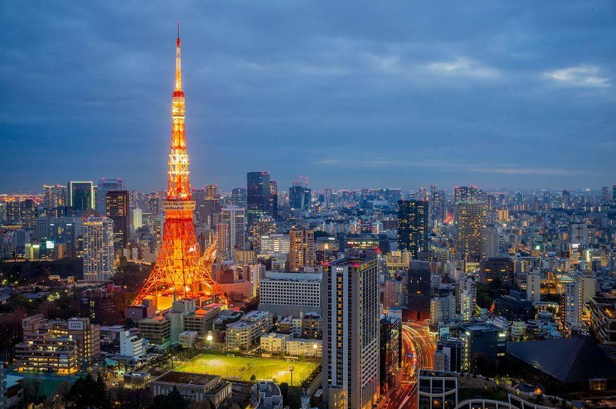
    At around 16:00 your guide will meet you in the hotel lobby and show you the capital by evening. The highlight is the 333-metre Tokyo Tower. It opened in 1958 and was modelled on the Eiffel Tower. From its observation deck, 150 metres up, the whole city is laid out before you. Next comes a stroll along Ginza, the street of the city’s most expensive shops. Its name means “silver mint”: the mint was moved here in 1612. Ginza is home to the Kabuki-za theatre (the current building, designed by Kengo Kuma, recreates the 1924 façade) and Tsukiji Hongan-ji temple, built in 1934 in the style of ancient Indian Buddhist architecture. The evening ends at the teamLab digital art museum. This tour can only be booked together with the main tour and is not included in its price. It is designed for guests arriving no later than 13:00.

    Your Russian-speaking guide will meet you in the hotel lobby, and the day begins in the Koishikawa Korakuen garden. It was laid out in 1629, at the dawn of the Edo period, by the lords of Mito – one of the three principal branches of the Tokugawa clan. Its ponds, rocks and man-made hills recreate famous landscapes in miniature, and the stone “Full Moon” bridge forms a perfect circle with its reflection. The garden’s name – “the garden of later enjoyment” – comes from the Chinese classics: a ruler should be the first to worry about his country’s troubles and the last to enjoy its pleasures.

    From there you will head to the red-brick Tokyo Station, opened in 1914 to a design by Tatsuno Kingo, and stop for photos at the Nijubashi bridge in front of the Imperial Palace gardens. The name “double bridge” survives from a wooden bridge of the Edo period, which stood on two-tier supports above a deep moat.

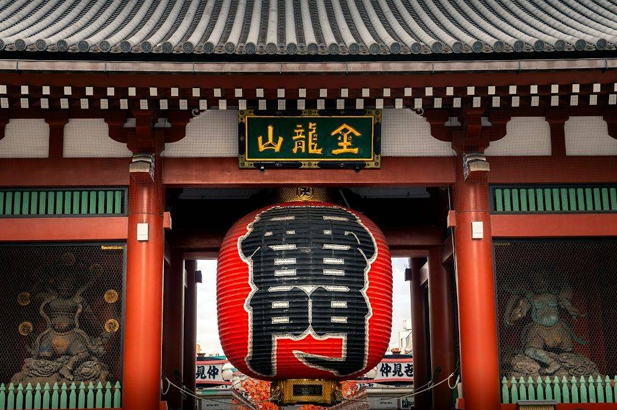
    The next stop is the historic Asakusa district and Senso-ji temple. Legend has it that in 628 fishermen pulled a statuette of Kannon, the goddess of mercy, out of the river in their net – and so began the story of Tokyo’s oldest temple. The entrance is guarded by the Kaminarimon gate with its red lantern weighing around 700 kilograms, and the temple is approached along Nakamise-dori, a shopping street some 250 metres long selling souvenirs and Japanese sweets. After lunch at a Japanese restaurant you will take part in a tea ceremony: a master will show you the entire ritual, and then you will try making matcha tea yourself.

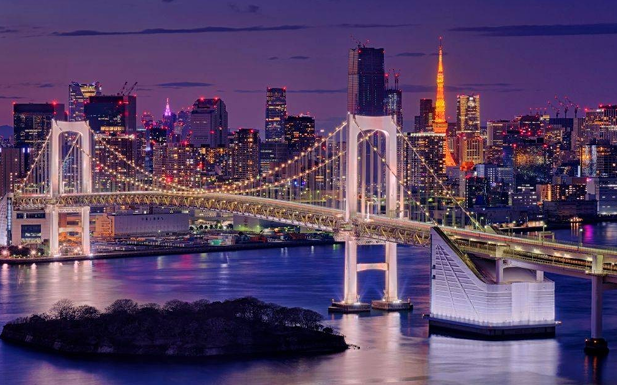
    In the evening you will head to Odaiba, an artificial island in Tokyo Bay. It offers one of the finest views of the city and of the two-tier Rainbow Bridge, 798 metres long and opened in 1993. The bridge’s name was chosen from suggestions made by the city’s residents themselves.

    This day is yours to enjoy. You can explore the city at your own pace, browse the shops or join the “Traditions of Tokyo” tour.

    Optional: “Traditions of Tokyo” tour

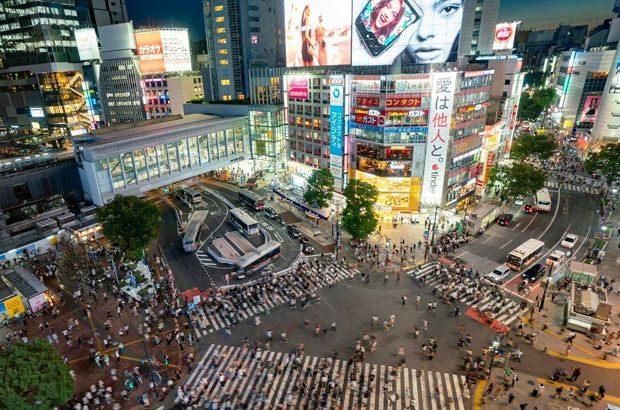
    Meiji Jingu shrine was founded in 1920 in honour of Emperor Meiji and Empress Shoken. The forest around it is man-made: some 100,000 trees were sent from all over Japan and planted by around 110,000 volunteers. You will then walk through Harajuku and its Takeshita Street – the heart of youth fashion and “kawaii” culture – and along Omotesando, the boulevard that was once the grand approach to the shrine. After lunch you will stroll through Shinjuku Gyoen, one of Tokyo’s most beautiful parks in cherry blossom season. In the Edo period this was the estate of the Naito clan; in the Meiji era it became an experimental agricultural station, then an imperial garden, and since 1949 it has been open to everyone. Last comes Shibuya, with its statue of the faithful dog Hachiko and the famous crossing where more than a thousand people cross on a single green light. Those who wish can stay in Shibuya for dinner and make their own way back to the hotel. This tour is not included in the price of the tour. It is best booked in advance, as confirmation on the spot cannot be guaranteed.

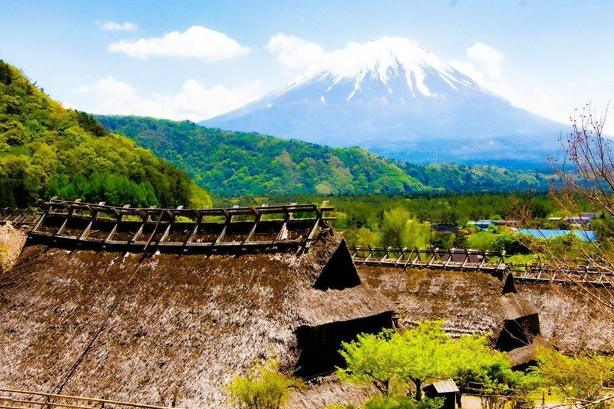
    In the morning you check out of the hotel with your luggage and travel with your guide to the foot of Mount Fuji, to the Lake Kawaguchi area. The drive takes about two and a half hours. The sacred mountain rises to 3,776 metres – the highest point in Japan. In 2013 Mount Fuji was inscribed on the UNESCO World Heritage List as a “sacred place and source of artistic inspiration”: it was to Fuji that Katsushika Hokusai dedicated his famous series of woodblock prints.

    Your first visit is to the Itchiku Kubota Art Museum, named after the master who devoted his life to reviving tsujigahana, a silk-dyeing technique of the Muromachi period. The main hall of the museum, which opened in 1994, rests on 16 trunks of hiba cypress, each more than a thousand years old, and the garden around it was laid out to Kubota’s own design. Here you will find kimono from his “Symphony of Light” series, devoted to the seasons and the universe.

    Next you will call in at the village of Saiko Iyashi-no-Sato. A village of thatched-roof houses once stood on the shore of Lake Sai, but in 1966 it was destroyed by a landslide. Forty years later it was rebuilt as an open-air museum: some twenty houses with workshops and little shops, set against the backdrop of Mount Fuji. After lunch you will stop on the way at Aokigahara forest, which grew on the solidified lava of the eruption of 864.

    In the evening you will arrive in Atami, a resort on the Pacific coast. Its hot springs have been famous since the 8th century, and on the orders of the shogun Tokugawa Ieyasu, Atami’s healing waters were carried all the way to him in Edo. You will spend the evening at the hotel, with dinner and a relaxing soak in the onsen.

    Because of cloud, Mount Fuji is not visible every day.

    In the morning a driver will take you to Atami Station, from where you will travel on your own by shinkansen bullet train to Shin-Osaka Station. Your guide will meet you right on the platform. After lunch at a Japanese restaurant you will set off to explore the most colourful streets of Osaka.

    Hozenji Yokocho is an old alley beside a small temple. The temple burned down during the bombing raids of 1945; only the statue of Fudo survived. For so many years worshippers have been splashing it with water as they make their wishes that it is now entirely covered in moss. Nearby runs the Dotonbori canal, begun in 1612, and beyond it stretches Shinsaibashi, a covered shopping street around 600 metres long.

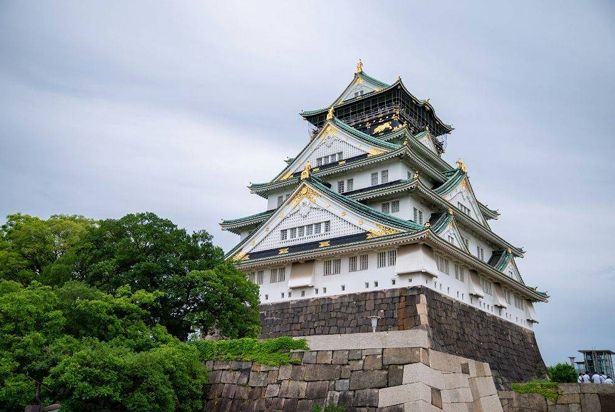
    At around 16:30 you will stroll through the park surrounding Osaka Castle. Its construction was begun in 1583 by Toyotomi Hideyoshi, the unifier of Japan, and in 1615 his clan fell together with the castle. The present main keep was built in 1931 with donations from the townspeople, on the original stone base: from the outside it has five tiers, inside eight floors (the castle museum is not included in the programme). In the evening you will transfer to Nara and check in to your hotel at around 19:00.

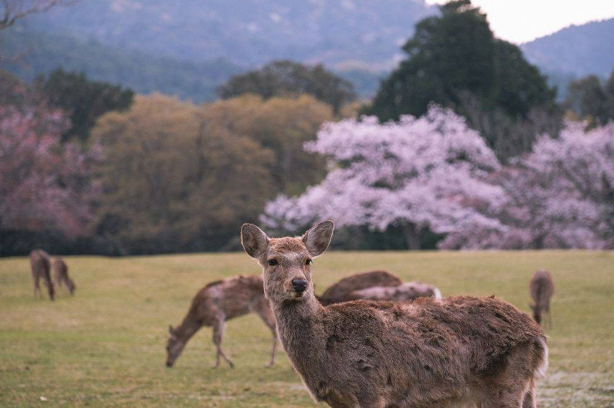
    From 710 to 784 Nara was the capital of Japan, and since 1998 the monuments of ancient Nara have been on the UNESCO World Heritage List. The day begins in Nara Park, where hundreds of tame deer roam freely. According to legend, the god Takemikazuchi arrived here riding a white deer, and ever since the deer have been revered as messengers of the gods; since 1957 they have been protected as a Natural Monument of Japan. You can treat the deer to special crackers sold at stalls right there in the park.

    At Todai-ji temple sits the Great Buddha, unveiled in 752. The bronze statue is almost 15 metres tall, and its ears alone measure 2.5 metres. The Great Buddha Hall has burned down more than once; the present one was consecrated in 1709. At almost 49 metres high, it remains one of the largest wooden buildings in the world.

    After a buffet lunch you will travel to Horyu-ji temple, traditionally said to have been founded by Prince Shotoku in 607. Its buildings are among the oldest wooden structures on Earth: tree-ring analysis has shown that the timber for the central pillar of its five-storey pagoda was felled in 594. In 1993 Horyu-ji became one of Japan’s first UNESCO sites. In the evening you will transfer to Kyoto – a journey of about an hour and a half – and check in to your hotel.

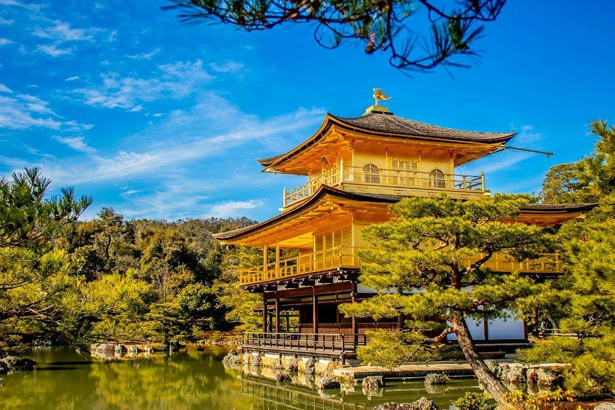
    From 794, for more than a thousand years, Kyoto was the capital of Japan, and 17 of its temples, shrines and castles, together with monuments in neighbouring Uji and Otsu, are on the UNESCO list. Your city tour begins at Kinkaku-ji, the Golden Pavilion. This was once the estate of the shogun Ashikaga Yoshimitsu, and after his death it was turned into a Zen temple. Each of the pavilion’s three floors is built in a different style, the upper floors are covered in gold leaf, and a phoenix crowns the roof. The pavilion is mirrored in the still surface of the pond – one of the most recognisable images of Japan.

    At Ryoan-ji temple, founded in 1450, you will see the famous rock garden: 15 stones on white gravel, and wherever you stand on the veranda, at least one of them is always hidden from view. No one knows who created the garden. After lunch you will stroll through Gion, the geisha quarter with its wooden machiya townhouses. Here geisha are called geiko; together with their apprentices, the maiko, they entertain guests in the teahouses. From here you will walk along an old street of souvenir shops in the Higashiyama district.

    The last stop of the day is Kodai-ji temple. It was founded by Nene, the widow of Toyotomi Hideyoshi, in memory of her husband, and its construction was generously funded by Tokugawa Ieyasu. Two teahouses survive here – the “Umbrella” and the “Autumn Rain” – along with a bamboo grove and a garden with a mirror pond.

    After the tour you will return to your hotel. Alternatively, you can stay on in the Kodai-ji garden for the evening illuminations and make your own way back.

    The day is free: wander unhurriedly through Kyoto’s old streets, drop into temples and teahouses, or take a guided trip to Arashiyama.

    Optional: Arashiyama tour

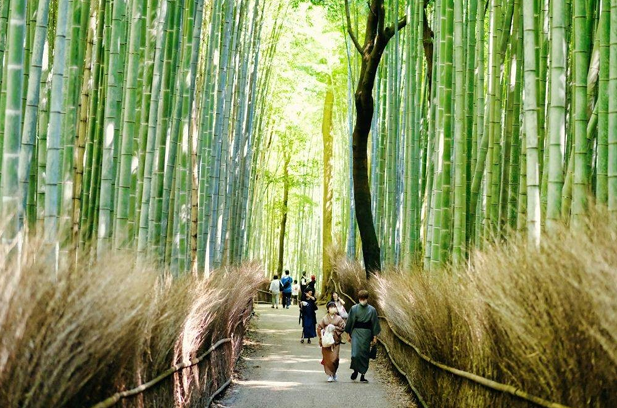
    The historic Arashiyama district is famous for its Sagano bamboo grove: the Ministry of the Environment has included its rustling among the “100 Soundscapes of Japan to Be Preserved”. Here too stands Tenryu-ji temple, founded in 1339 by the shogun Ashikaga Takauji in memory of Emperor Go-Daigo – the first of Kyoto’s five great Zen temples and a UNESCO site. From the Togetsukyo bridge you can see the mountains and the river; legend has it that Emperor Kameyama gave it its name, “the bridge the moon crosses”.

    This tour is not included in the price of the tour and is best booked in advance.

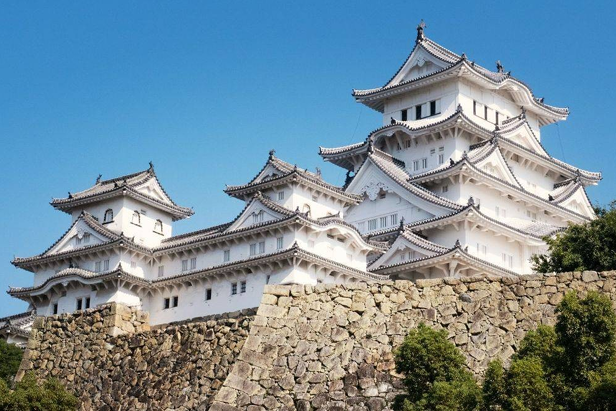
    In the morning you check out, leave your luggage in the left-luggage room and travel with your guide to Himeji. Its castle is the largest of the twelve Japanese castles that have kept their original main keep; its snow-white walls have earned it the name White Heron Castle. The keep was built in the early 17th century by the lord Ikeda Terumasa: from the outside it has five tiers, inside six floors and a basement. In 1993 Himeji became one of Japan’s first UNESCO World Heritage Sites, and in spring the white castle amid blossoming cherry trees is one of the most popular sights to photograph.

    After a walk in the park around the castle, you will visit the Koko-en garden, opened in 1992 for the city’s centenary on the site of the lord’s residence: it is made up of nine separate gardens in the Edo-period style. You will have lunch on your own, after which the group returns to Kyoto.

    You will collect your luggage from the hotel, your guide will see you onto the train, and you will continue to Nagoya on your own. You will receive your shinkansen tickets in advance together with your voucher. Your hotel is close to Nagoya Station.

    In the morning you check out with your luggage and meet your guide. First comes the Toyota Commemorative Museum of Industry and Technology. It occupies the red-brick buildings of the experimental weaving mill that Sakichi Toyoda opened here in 1911. Toyoda started out with a wooden hand loom, and in 1924 he created an automatic loom that changed the shuttle without stopping. In 1933 his son Kiichiro set up an automobile department within the company – and so Toyota grew out of the weaving business. The museum has two pavilions: one for textile machinery and one for automobiles.

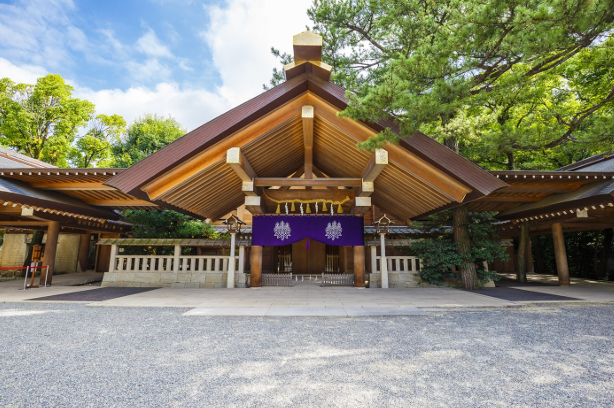
    Next you will head to Atsuta Shrine (Atsuta Jingu), which legend holds to be more than 1,900 years old. It houses the sacred sword Kusanagi no Tsurugi – one of the three Imperial Regalia of Japan, which is never shown to anyone. The shrine still has a wall donated by Oda Nobunaga – one of Japan’s three famous earthen walls – and its museum holds thousands of objects, including swords. You will visit one of its exhibitions.

    Before leaving you can buy a bento – a Japanese boxed lunch – at the station and enjoy it on the way. The train will take you to Matsumoto, where you will check in to a hotel near the station.

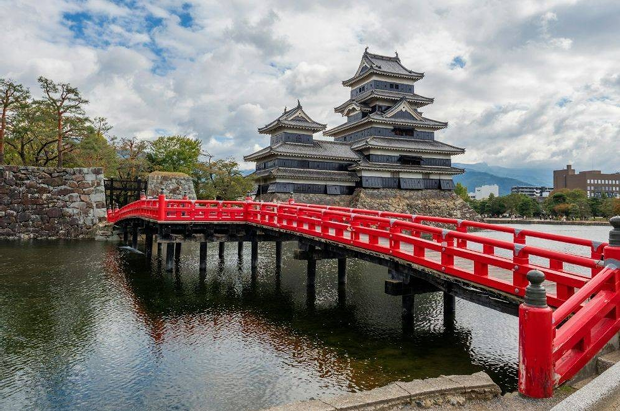
    In the morning you check out with your luggage and meet your guide. Matsumoto Castle is one of five Japanese castles designated as National Treasures. Its main keep was built in 1593–1594: from the outside it has five tiers, while inside there are six floors, one of them hidden from view. Its black walls earned the castle the nickname “Crow Castle”. Later, in the peaceful Edo period, a moon-viewing turret was added. After the visit you will stroll through the park.

    You will then travel on to Nagano, to Zenko-ji temple, founded in the 7th century. Legend has it that the temple holds the first Buddhist statue ever brought to Japan, but no one has seen it since 654. Beneath the main hall – a National Treasure of Japan – runs an underground passage: visitors walk through it in complete darkness, feeling their way in search of the “key to paradise”. A long street of shops stretches away from the temple, where you can sample local delicacies.

    After lunch on your own, you will go to a sake tasting: Nagano Prefecture ranks second in Japan for the number of sake breweries. Your guide will then see you onto the train, and you will return to Tokyo on your own. You will receive your shinkansen tickets in advance together with your voucher.

    The last full day of your journey is free: wander through your favourite neighbourhoods, do some shopping and say goodbye to the city.

    Optional: Tokyo Disneyland or DisneySea

    Tokyo Disneyland opened in 1983 as the first Disney park outside the United States; it has seven themed lands. Neighbouring DisneySea is dedicated to the myths and legends of the sea, and in 2024 it gained Fantasy Springs, with the worlds of “Frozen”, “Tangled” and “Peter Pan”. If you wish, a Russian-speaking guide will accompany you to the park and help you find your bearings. You will return to the hotel on your own.

    Tickets are not included in the price of the tour and can only be booked in advance.

    Please check out of your room by 10:00. The shuttle will pick you up at the hotel entrance and take you to the airport for your flight. We hope Japan has given you a wealth of vivid memories. Until we meet again – and many more journeys with Dallure!

    Order a free consultation